
Importing goods from China to Australia involves more than comparing ocean freight rates.
Before booking a shipment, an importer needs to consider supplier readiness, cargo dimensions, export documentation, Australian biosecurity requirements, destination charges, customs clearance and final delivery.
A missing document, inaccurate packing information or unsuitable wooden packaging can delay the shipment and create additional costs. This guide explains the main steps importers should understand before their goods leave China.

1. What information is needed for an accurate freight quote?
A reliable freight quote starts with accurate cargo information. Before requesting a price, ask your supplier to provide:
- Product name and intended use
- Number of cartons, pallets, crates or machines
- Dimensions and gross weight of each package
- Total gross weight and total cargo volume
- Factory or pickup address in China
- Destination port or delivery postcode in Australia
- Expected cargo-ready date
- Photos of the products and packaging
- Details of any batteries, liquids, powders, chemicals or magnetic materials
For machinery, furniture, construction materials and oversized cargo, provide individual dimensions and weights rather than only the total volume.
Estimated dimensions are useful for initial planning, but the final shipping plan should be based on the actual packed dimensions and weight.
2. Should you choose FCL or LCL shipping?
Sea freight from China to Australia is generally shipped as either FCL or LCL.
FCL shipping
FCL means Full Container Load. The container is used for one importer’s cargo. Common options include 20GP, 40GP and 40HQ containers.
FCL can be suitable when the cargo volume is large, when products are difficult to handle, or when the importer wants to reduce the number of loading and unloading operations.
The usable capacity of a container depends on more than its theoretical volume. Package dimensions, cargo shape, weight distribution and loading method all affect how much can actually be loaded.
LCL shipping
LCL means Less than Container Load. Cargo from several importers is consolidated into one container.
LCL can be suitable when:
- The order is too small to fill a container
- The importer is placing a trial order
- Goods are purchased from several Chinese suppliers
- The importer wants to ship smaller quantities more frequently
LCL charges are normally calculated according to cargo volume or chargeable weight. Importers should also consider consolidation, handling and destination warehouse charges when comparing quotations.
3. How can goods from several Chinese suppliers be consolidated?
Importers often purchase products from factories in different Chinese cities. The goods can be delivered to one consolidation warehouse instead of arranging several international shipments.
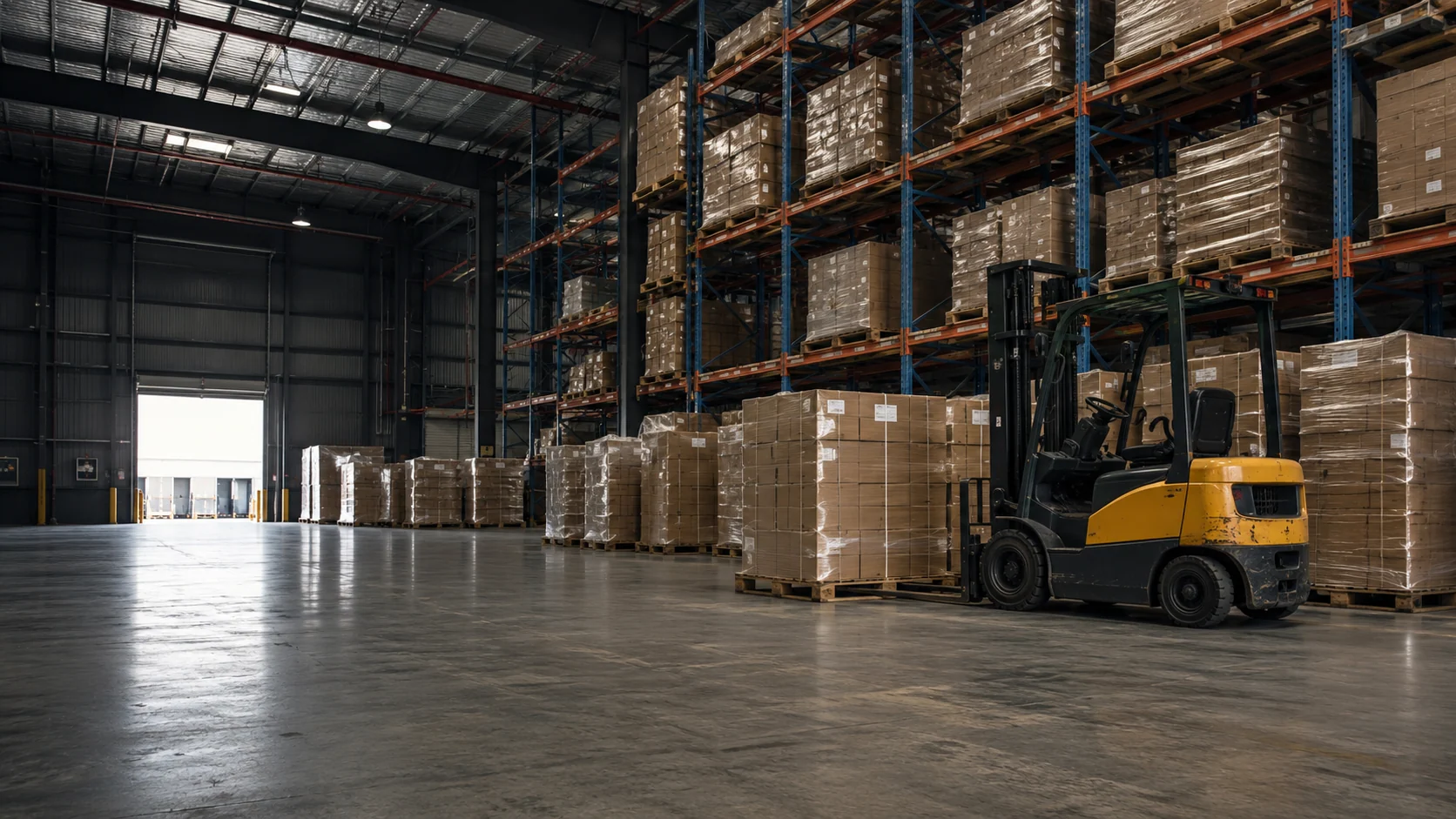
A consolidation warehouse can assist with:
- Receiving goods from different suppliers
- Checking package quantities
- Taking arrival photographs
- Measuring actual dimensions and weight
- Reporting visible packaging damage
- Repacking damaged cartons
- Applying shipping labels
- Building pallets or plywood cases
- Preparing a container loading plan
Every supplier should receive the correct warehouse address, shipping mark and delivery reference. The warehouse should record which packages belong to each purchase order so missing goods can be identified before export.
4. How does the shipping process work?
The exact process varies by Incoterm and shipping method, but a typical shipment follows these stages:
- Confirm the purchase order and cargo-ready date.
- Collect the goods from the supplier or receive them at a consolidation warehouse.
- Check the actual package dimensions, weight and condition.
- Select FCL or LCL and confirm the sailing schedule.
- Prepare export documents and complete China customs declaration.
- Load the container or deliver LCL cargo to the nominated warehouse.
- Ship the goods to Australia.
- Submit documents for Australian customs and biosecurity clearance.
- Pay applicable destination charges, duty and GST.
- Arrange container pickup or cargo delivery.
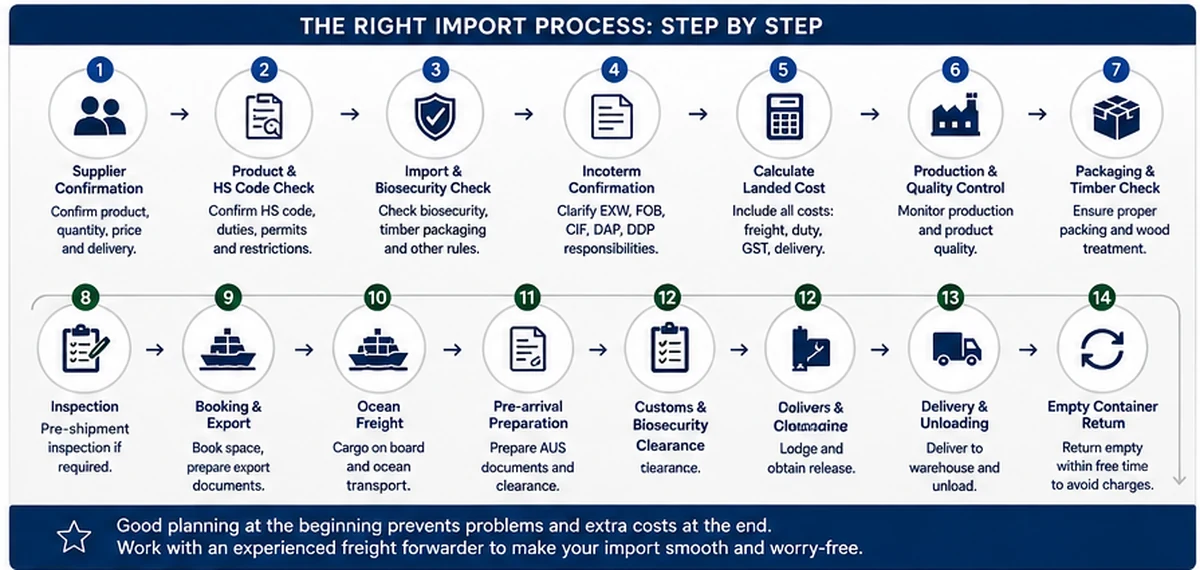
The port-to-port sailing time is not the complete delivery time. Importers should also allow time for pickup, consolidation, export procedures, destination clearance and final delivery.
5. Which shipping documents are normally required?
Requirements depend on the product, but common documents include:
- Commercial Invoice
- Packing List
- Bill of Lading
- Product description and material information
- HS code information
- Country of origin information
- Supplier and consignee details
- Wooden packaging declaration
- Treatment or fumigation certificate when applicable
- Import permits or product-specific documents when required
The Commercial Invoice and Packing List should be consistent. Product descriptions, package quantities, gross weight and cargo value should not conflict across the documents.
Avoid vague descriptions such as “parts,” “samples” or “accessories.” Customs and biosecurity authorities may require a clear explanation of the product, material and intended use.
6. Why are Australian biosecurity requirements important?
Australia applies strict biosecurity controls to reduce the risk of pests, soil, seeds and other biological material entering the country.
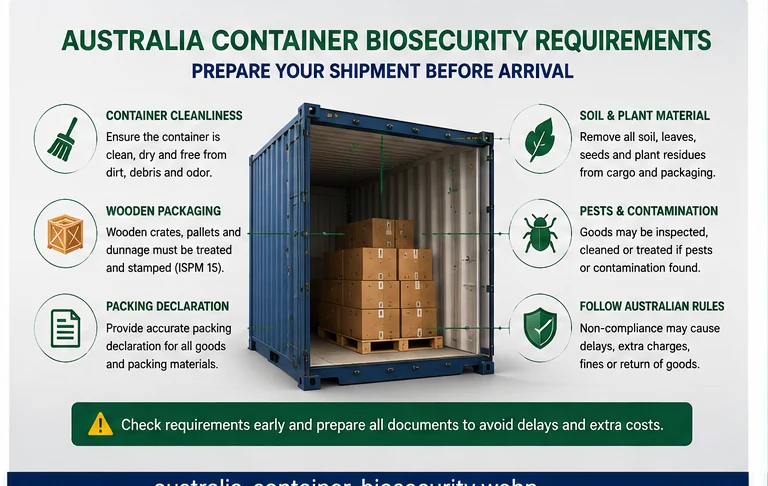
Cargo may require additional attention if it contains or is packed with:
- Solid wood or bamboo
- Natural plant materials
- Food or agricultural products
- Used machinery or outdoor equipment
- Products contaminated with soil
- Untreated wooden pallets or cases
Importers should ask suppliers to keep products and packaging clean and dry. If wooden packaging is required, confirm that it meets the applicable treatment and marking requirements.
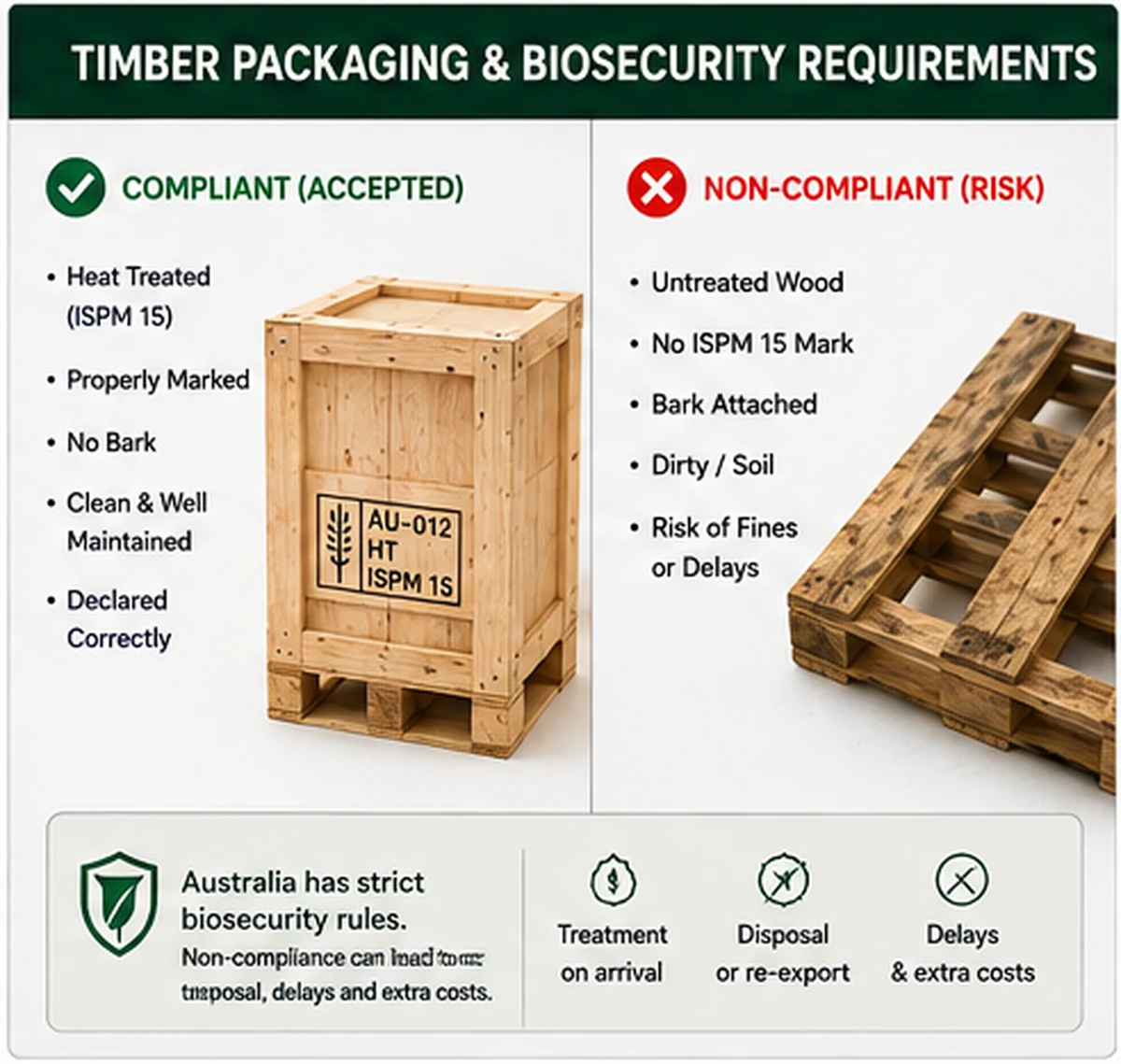
Plywood cases and compliant treated pallets may be preferable to unidentified solid-wood packaging. Take clear photographs of all pallets, crates and wooden supports before collection.
Product-specific requirements should be checked before the goods leave China, not after they arrive in Australia.
7. Which Incoterm should the importer use?
The Incoterm determines which costs and responsibilities are handled by the supplier and which are handled by the importer.
EXW
Under EXW, the importer generally arranges pickup from the supplier’s factory and manages the main transportation process. Confirm that the supplier can provide the information required for export declaration.
FOB
Under FOB, the supplier normally handles the agreed China-side delivery and export process. Confirm exactly which origin charges are included.
CIF
Under CIF, the supplier arranges the main freight to the named destination port. CIF does not normally mean that all Australian destination charges, customs clearance, taxes and delivery are included.
DAP or DDP
Door-delivery terms can simplify the process, but the importer should still confirm who acts as importer of record, which taxes are included and which inspection or exceptional charges are excluded.
8. What costs should be included in the landed cost?
The ocean freight rate is only one part of the total import cost.
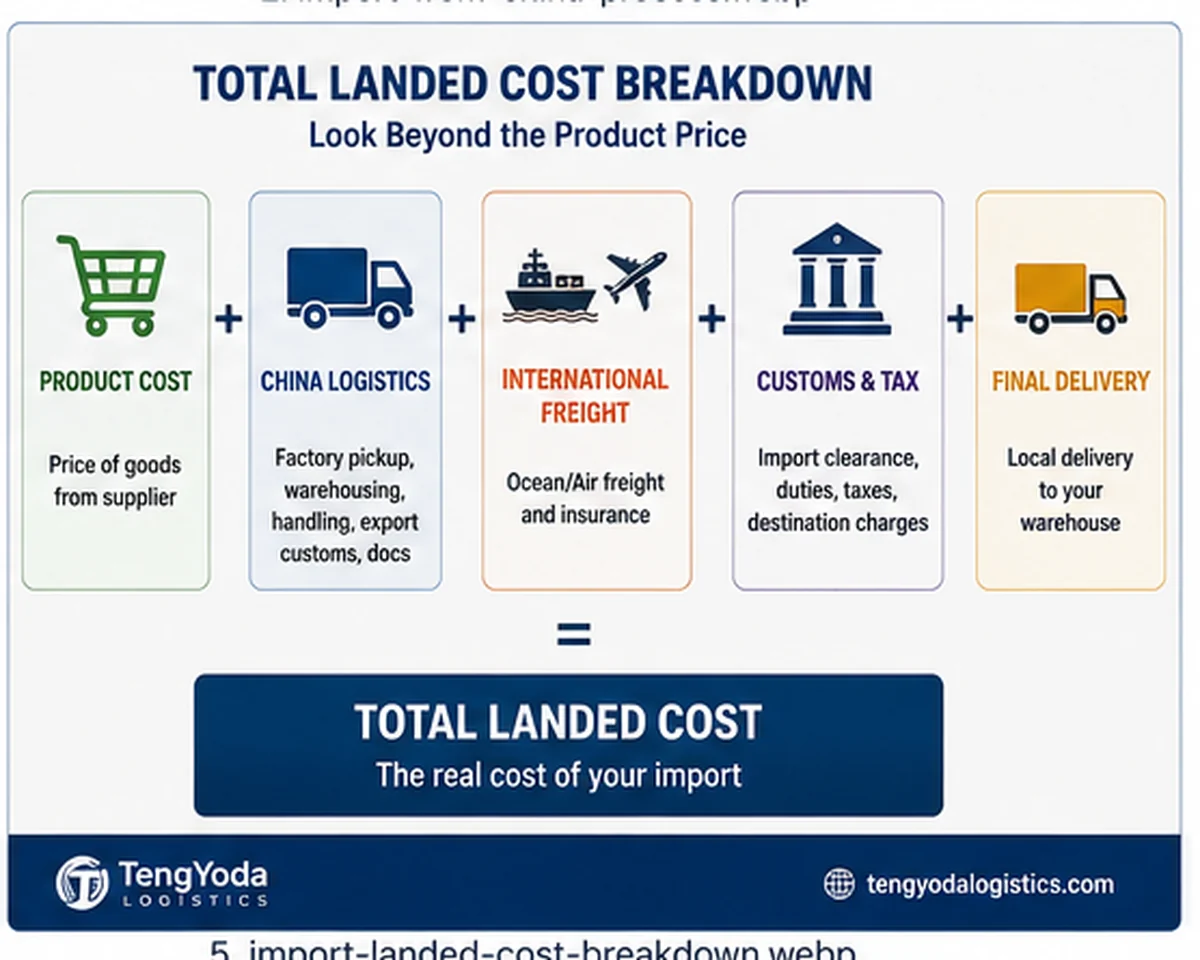
Depending on the shipment, the importer may need to budget for:
- Factory pickup and China warehouse charges
- Export packing, palletising or crating
- Export customs declaration and origin charges
- Ocean freight and carrier surcharges
- Cargo insurance
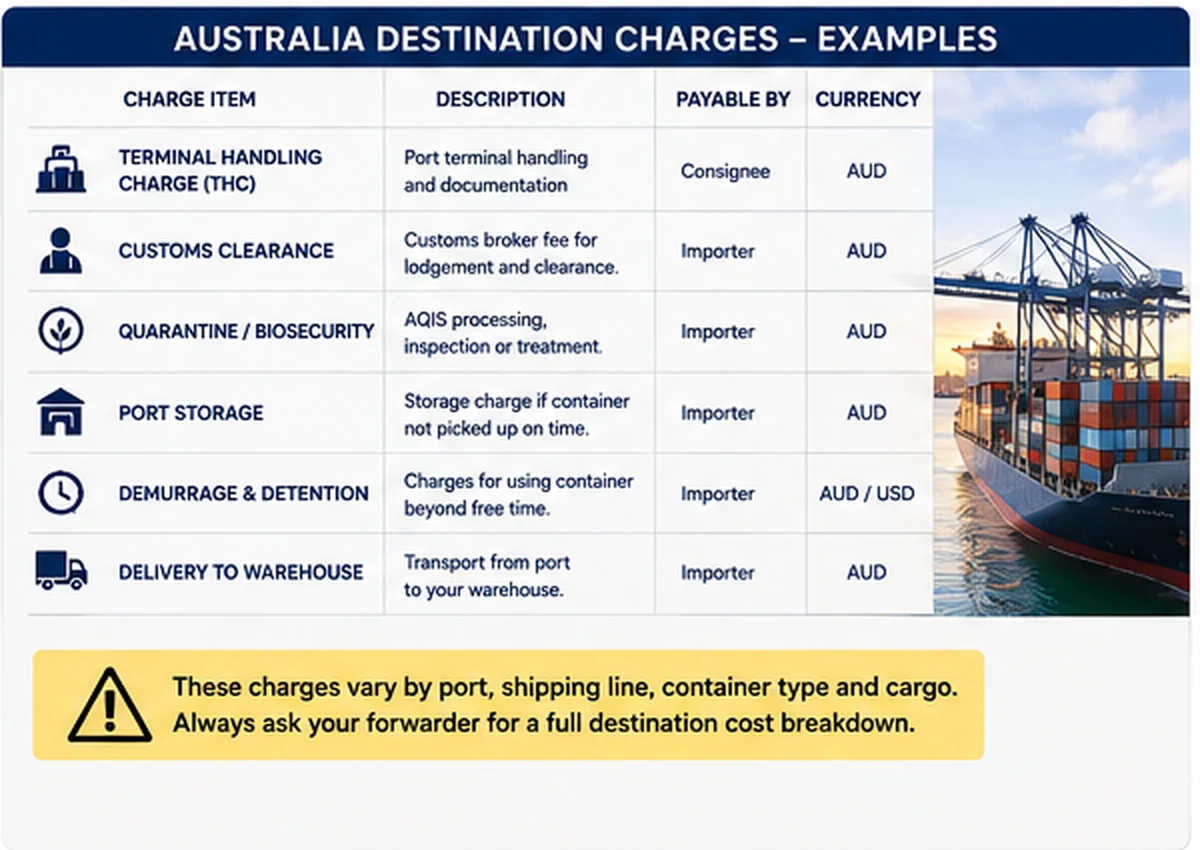
- Australian terminal and shipping-line charges
- Customs clearance, import duty and GST
- Biosecurity processing or inspection
- Fumigation, cleaning or treatment
- Container deposit
- Truck delivery and unloading
- Port storage and container detention
Ask whether every quotation includes or excludes each stage. A low ocean freight rate can become expensive if destination charges or delivery requirements have not been considered.
9. How can importers avoid destination charges and delays?
Unexpected destination charges often arise because documents, payments or delivery arrangements are not completed before cargo arrival.
To reduce the risk:
- Send clearance documents to the customs broker before arrival.
- Monitor the vessel’s updated arrival schedule.
- Check whether destination invoices have been received.
- Pay shipping-line and government charges promptly.
- Confirm that the cargo release document is available.
- Book a truck before the last free day.
- Confirm that the delivery site can unload the cargo.
- Return the empty container within the permitted period.
Port storage may apply when a container remains at the terminal beyond the available free period. Container detention may apply when the empty container is not returned within the permitted time.
For a live-unload delivery, make sure labour and unloading equipment are ready before the truck arrives.
10. Common mistakes made by first-time importers
Many additional costs can be prevented before the cargo leaves the factory. Common mistakes include:
- Booking before confirming the cargo-ready date
- Using estimated dimensions as final measurements
- Comparing freight rates without comparing included charges
- Failing to check Australian import requirements
- Using unsuitable solid-wood packaging
- Providing vague product descriptions
- Preparing customs documents too late
- Ignoring destination charges
- Not planning how the container will be unloaded
- Assuming CIF includes every cost after arrival
- Failing to consider cargo insurance for high-value goods
11. Importer’s pre-shipment checklist
Before approving the shipment, confirm that:
- Production is complete
- Product quantities have been checked
- Final dimensions and weights are available
- Packaging is suitable for international transportation
- Wooden packaging requirements have been reviewed
- Product and packing photographs are available
- The shipping method and Incoterm are confirmed
- Export documents are ready
- The customs broker has reviewed the import documents
- Destination charges have been considered
- The delivery address and unloading conditions are confirmed
Need help planning a shipment from China?
TengYoda Logistics helps importers coordinate the China side of international shipments, including factory pickup, multi-supplier consolidation, FCL and LCL booking, export customs declaration, packing advice and shipping-document coordination.
For a practical shipping plan, send us:
- Product name
- Number of packages
- Package dimensions
- Gross weight
- Pickup city in China
- Destination port or delivery postcode
- Expected cargo-ready date
Contact Vinson on WhatsApp or learn more about our sea freight services.