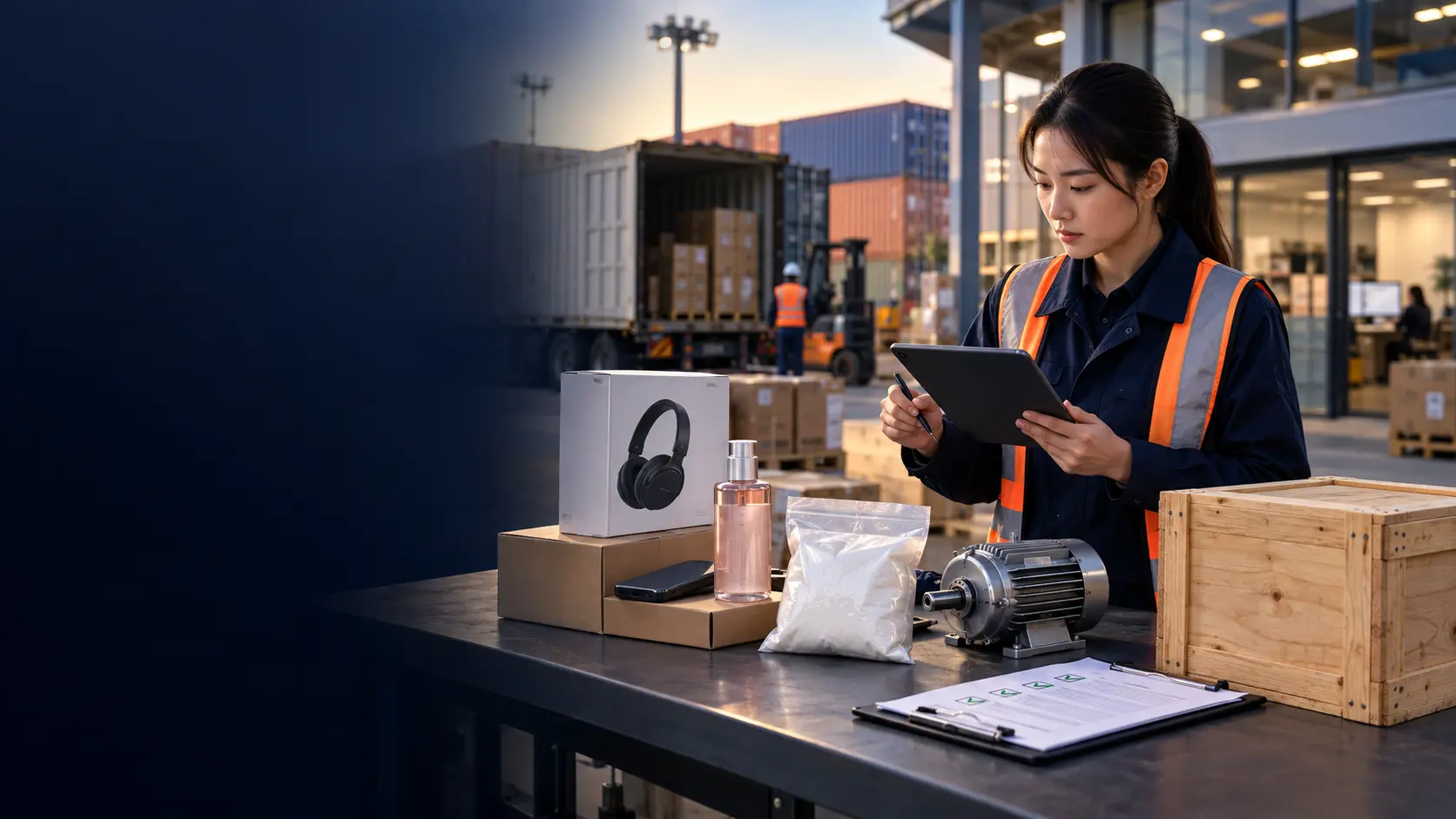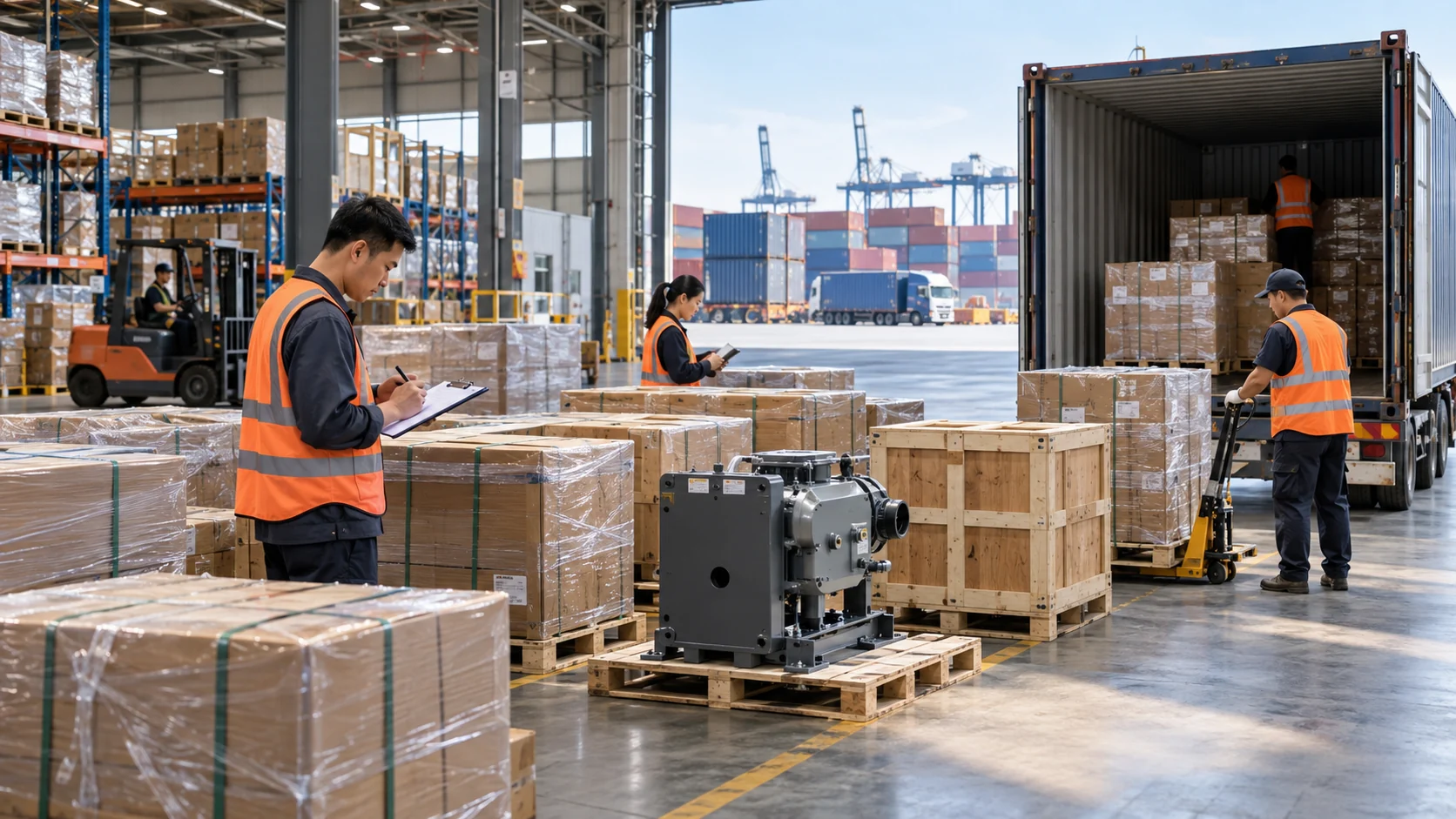
Buying from several suppliers on Alibaba can reduce sourcing costs and give an importer access to a much wider product range. The difficult part usually begins after the purchase orders are placed. One supplier may have 15 cartons in Guangzhou. Another may have a machine in Foshan. A third may be shipping liquid products from Shanghai. Their packing standards, completion dates, documents and cargo descriptions may all be different. If every supplier ships separately, the importer may pay repeated pickup, export, documentation, customs and destination charges. Consolidation brings these orders into one coordinated shipping plan—but only when the cargo is reviewed before it moves. This guide explains how South American importers can purchase from multiple Alibaba suppliers and use TengYoda to coordinate collection, receiving, cargo checks, consolidation, export, international transport, destination clearance and final delivery.
What is Alibaba order consolidation?
Alibaba order consolidation means collecting purchases from multiple Chinese suppliers at one nominated warehouse, identifying each shipment, checking the received cargo, and combining compatible goods into one export shipment.
Depending on the final volume, weight, cargo type and destination, the consolidated shipment may move as:
- LCL sea freight: cargo shares container space with other shipments.
- FCL sea freight: the importer uses a complete 20GP, 40GP or 40HQ container.
- Air freight: suitable for urgent, higher-value or relatively small shipments.
- Courier: normally used for documents, samples and small parcels.
- Open-top or flat-rack container: used when machinery or cargo cannot fit through a standard container door or exceeds standard dimensions.
- Breakbulk or RoRo: considered for very large, heavy or self-propelled equipment.
Consolidation is not simply putting different boxes into the same container. The cargo must be compatible, legally exportable, accepted by the selected carrier and suitable for the importing country's requirements.
Step 1: Send the purchasing and shipping plan before ordering
The safest time to review a shipment is before the importer pays every supplier.
For each Alibaba order, provide:
- Supplier company name and contact person
- Product name in plain, specific language
- Product use and main material
- Quantity and unit value
- Number and type of packages
- Estimated packed dimensions and gross weight
- Pickup city in China
- Expected cargo-ready date
- Photos, catalogue, product link or specification sheet
- Battery, liquid, powder, magnet, motor, fuel, oil, refrigerant or chemical content
- Brand information and any authorization documents required
- Destination country, city and postal code
- Whether the consignee is a company or an individual
- Preferred trade term, such as EXW or FOB
This first review helps identify restricted goods, incompatible cargo, unrealistic packing information and documents that must be prepared before pickup.
Step 2: Classify every product correctly
A vague description such as “parts,” “accessories,” “equipment,” “samples” or “daily products” is not enough for freight booking or customs declaration.
Each item should have a specific commercial description. For example:
| Vague description | Better description | Information still needed |
|---|---|---|
| Machine | Automatic metal-cutting machine | Model, function, power, new/used status, serial number |
| Parts | Steel diesel-engine connecting rods | Material, application, part number |
| Electronics | LED ceiling lights | Wattage, material, brand and whether batteries are included |
| Chemical | Water-based acrylic adhesive | Composition, concentration, SDS and transport status |
| Furniture | Knock-down wooden dining tables | Wood species, quantity, packing and treatment status |
| Beauty products | Liquid facial cleanser in retail bottles | Ingredients, volume per bottle, SDS and destination compliance |
Accurate names support HS-code review, carrier acceptance, Chinese export declaration and destination customs clearance. The final HS classification and import admissibility should be confirmed against the actual specifications and the destination country's rules.
Practical cargo categories
Before receiving cargo, TengYoda separates products into working categories:
- Ordinary dry cargo: clothing, non-powered household goods, metal hardware and many furniture items.
- Fragile or high-value cargo: glass, lighting, instruments and sensitive electronics.
- Battery, magnetic or powered products: lithium batteries, equipment with batteries, motors and strong magnets.
- Liquids, powders and chemical products: coatings, adhesives, cosmetics, cleaning products, additives and raw materials.
- Machinery and spare parts: new or used machines, engines, pumps, tools and production lines.
- Oversized or heavy cargo: items exceeding standard container dimensions or normal warehouse handling capacity.
- Controlled or restricted cargo: branded goods, medical items, food, plants, timber, pesticides and other products requiring additional approval.
- Prohibited cargo: products that cannot legally be exported, imported or carried on the proposed route.
These categories determine warehouse location, required documents, packing method and transport mode. Goods should not be combined merely because they are going to the same consignee.
Step 3: Give every supplier an inbound instruction
Before delivery to the consolidation warehouse, each supplier receives the warehouse address, receiving hours, booking reference and shipping-mark format.
A useful shipping mark normally includes:
- Importer or project code
- TengYoda warehouse reference
- Supplier code or purchase-order number
- Carton number, such as 1/20, 2/20 and 3/20
- Destination code where necessary
Every outer package should carry a clear mark. A purchase-platform order number alone may not be enough to identify a shipment after it reaches a busy warehouse.
Suppliers should also be instructed not to deliver unannounced oversized cargo, leaking packages, unpacked machines or regulated products before acceptance is confirmed.
Step 4: Collect or receive goods from different suppliers
Two common arrangements are available:
Supplier delivery
The supplier sends the cargo to the nominated warehouse. This can work well when the supplier's domestic delivery arrangement is clear and the cargo is manageable.
TengYoda pickup coordination
TengYoda can arrange pickup from the factory or supplier location. Before dispatch, we confirm the address, contact person, package count, loading conditions and whether a tail-lift truck, forklift, crane or special vehicle is required.
EXW pickup is not automatically the lowest-cost choice. A remote factory, a residential pickup point, a machine without proper packing or a site without loading equipment can change the collection cost.
Step 5: Receive, identify and record small cargo

For cartons, parcels and other small cargo, the warehouse normally performs an outer receiving check that may include:
- Matching the shipping mark and inbound reference
- Counting the number of packages received
- Photographing the external condition
- Recording actual gross weight and outer dimensions
- Checking for visible crushing, holes, water damage or loose packing
- Separating unidentified, damaged or suspicious packages
- Updating the receiving record for the importer
An outer check is not the same as a product-quality inspection. Opening sealed retail cartons, counting every unit, testing products or checking specifications must be requested and agreed separately.
How small shipments are prepared
Depending on the cargo, small packages may require:
- Repacking weak cartons
- Adding corner protection or cushioning
- Waterproof wrapping
- Strapping compatible cartons onto pallets
- Building export wooden cases
- Applying new shipping marks
- Separating fragile items from dense or heavy cargo
- Preventing empty space and carton movement inside the container
Wood packaging used for international transport may need to meet ISPM 15 requirements. The exact destination treatment and marking rules should be checked before packing.
Step 6: Review liquids, powders and chemical products before acceptance

The word “chemical” covers a very wide range of products. A water-based consumer product, a flammable solvent and a corrosive industrial chemical cannot be treated in the same way.
Before a chemical, liquid or powder is collected, request:
- Exact product name and intended use
- Ingredient or composition information
- Current Safety Data Sheet (SDS), normally with 16 sections
- Transport classification, including UN number, proper shipping name, class and packing group when applicable
- Flash point for relevant liquids
- Package type, inner volume and total quantity
- Photos of inner and outer packaging
- Test reports or transport documents when required
- Manufacturer and emergency-contact information
- Destination import permits, registrations or labeling evidence where applicable
The SDS is a starting document, not automatic permission to ship. The carrier or booking agent may request an additional transport appraisal, battery test report, dangerous-goods declaration, packaging certificate or other supporting material.
Chemical cargo handling principles
- Do not send an undeclared liquid, powder or chemical to a general-cargo warehouse.
- Do not conceal a regulated product under a vague cargo name.
- Dangerous goods require a suitable warehouse, trained handling, compliant packaging, labels and an accepting carrier.
- Incompatible chemicals must not be consolidated together.
- Some products may be legal to export from China but restricted or prohibited at destination.
- Carrier acceptance can differ by route, vessel, airline and season.
TengYoda reviews the available information, coordinates with appropriate warehouses and carriers, and explains whether the proposed route is workable. Final acceptance remains subject to the actual cargo, documentation, carrier approval and government requirements.
Step 7: Inspect and prepare machinery
Machinery shipments require more information than the machine's purchase price and approximate weight.
For each machine, provide:
- Exact name, brand and model
- Function and industry application
- New or used condition
- Manufacturing year and serial number
- Accurate packed and unpacked dimensions
- Gross weight and net weight
- Centre of gravity and lifting points for heavy equipment
- Power source and electrical specifications
- Photos from all sides
- Loading and unloading method
- Whether parts can be removed to reduce dimensions
- Whether the equipment can move under its own power
- Details of fuel, oil, hydraulic fluid, refrigerant or batteries
Preparing new machinery
New machinery is usually protected against moisture, shock, vibration and movement. Depending on the equipment, preparation may include rust prevention, moisture barrier, desiccants, wooden skids, steel frames, cases, blocking and bracing.
Preparing used machinery
Used machinery may require cleaning, removal of soil or plant residue, inspection for oil leakage, draining or securing fluids, battery isolation and supporting ownership or valuation documents. Destination authorities may impose additional requirements on used equipment.
The machine should never be declared only as “equipment.” Its exact function, model, material and operating principle may affect both HS classification and import controls.
Step 8: Plan oversized and heavy-cargo loading before pickup
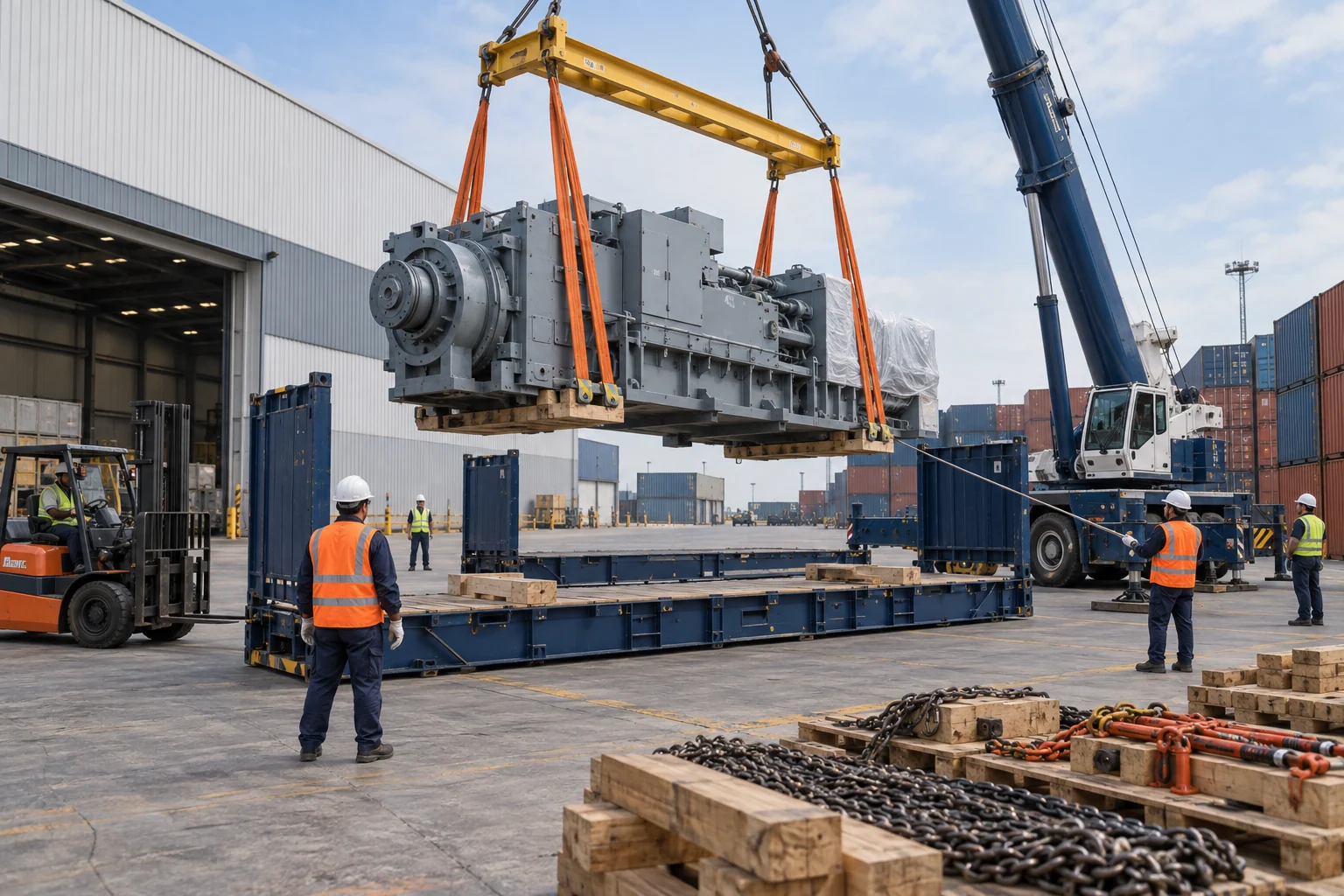
Oversized cargo cannot be planned from a supplier's catalogue dimensions alone. The shipping dimensions after dismantling and export packing must be confirmed.
The planning sequence normally includes:
- Confirm the final length, width, height and weight of every package.
- Identify lifting points and centre of gravity.
- Check factory access, warehouse access and destination unloading conditions.
- Decide whether the machine can enter a standard container safely.
- Compare standard container, open top, flat rack, RoRo and breakbulk options.
- Design blocking, bracing and lashing based on the selected transport mode.
- Arrange suitable cranes, forklifts, ramps, slings, spreader beams and low-bed trailers.
- Photograph the loading and securing process.
- Confirm the destination has suitable unloading equipment before departure.
Common oversized loading methods
- Forklift loading: for cargo within forklift capacity and with safe fork pockets or lifting clearance.
- Crane loading: for heavy, irregular or top-loading cargo. A lifting plan and suitable rigging are required.
- Open-top container: useful where cargo fits the container footprint but must be loaded from above or exceeds normal height.
- Flat-rack container: suitable for over-width, over-height or heavy machinery that can be secured to a platform.
- RoRo: suitable for operable self-propelled equipment or units placed on carrier equipment, subject to service availability.
- Breakbulk: considered for cargo too large or heavy for containerized solutions.
No person should work beneath a suspended load. The lifting and securing plan must be prepared by competent service providers using equipment suitable for the verified load.
Step 9: Decide what can and cannot be consolidated together
Cargo compatibility affects safety, insurance exposure and carrier acceptance.
Examples of combinations requiring special review include:
- Heavy machinery with fragile cartons
- Chemicals with food, cosmetics or textiles
- Wet cargo with moisture-sensitive goods
- Strong magnets near electronic or navigational equipment
- Batteries with ordinary air cargo
- Sharp metal products with soft retail packaging
- Used equipment with clean consumer products
- Cargo with strong odour near absorbent goods
Sometimes the best consolidation plan uses separate pallets, separate containers or even separate transport modes. Reducing the number of shipments is useful only when it does not create a larger damage or compliance risk.
Step 10: Confirm the final measurement and shipping option
Supplier estimates are useful for planning, but freight charges may be based on the cargo actually received.
After the inbound orders are ready, TengYoda can summarize:
- Actual package count
- Actual gross weight
- Actual cargo volume
- Packing condition
- Special-handling requirements
- Cargo-ready status by supplier
- Recommended transport mode
- Proposed loading arrangement
- China origin charges
- International freight
- Expected destination services and exclusions
For LCL cargo, charging may be based on weight or volume according to the route's revenue-ton rule. For air freight, the chargeable weight is normally the higher of actual weight and volumetric weight. For FCL cargo, container capacity, payload, weight distribution and road restrictions still matter even when the ocean rate is quoted per container.
Step 11: Prepare commercial and export documents
Typical documents may include:
- Commercial invoice
- Packing list
- Purchase contract or supporting transaction documents
- Customs declaration information
- Bill of lading instructions
- HS-code and declaration-element information
- Certificate of origin where applicable
- Product licences, permits, certificates or test reports
- SDS and dangerous-goods documents where applicable
- Fumigation or treatment documents when required
- Machinery model, serial-number and condition information
When goods come from several suppliers, the export and commercial-document structure must be planned. Product descriptions, quantities, values, package counts and consignee information should remain consistent across documents.
Under-declaring value, hiding regulated cargo or using a deliberately false product name can lead to holds, penalties, additional costs, loss of insurance protection or seizure.
Step 12: Book transport and load the shipment
After cargo and documents are accepted, TengYoda coordinates the booking and origin operations. Depending on scope, this may include:
- Booking with the selected carrier or service provider
- Empty-container release and trucking
- Warehouse loading appointment
- Container condition check
- Loading supervision or photo record
- Cargo distribution and weight control
- Blocking, bracing and lashing
- Container seal recording
- Chinese export customs coordination
- Shipping-instruction submission
- Bill-of-lading draft review
The importer should check names, addresses, cargo description, package count and release method on the draft bill of lading before the carrier's amendment deadline.
Step 13: Track the shipment and prepare South American import clearance
The destination broker should not wait until the vessel arrives to review the shipment.
Before departure or early in transit, confirm:
- Importer registration and tax identification
- Product admissibility and licences
- HS classification and customs value
- Duties, VAT and other taxes
- Required originals or electronic documents
- Port and carrier destination charges
- Customs-broker appointment
- Delivery address and access restrictions
- Forklift, crane or labour required for unloading
- Container free time and empty-return location
Requirements differ across Brazil, Chile, Peru, Colombia, Ecuador, Argentina, Uruguay, Paraguay and other South American markets. A term described as “door to door” does not automatically mean that duties, taxes, inspections, demurrage, storage or permits are included.
TengYoda can coordinate with the importer and destination service partners to define the scope as port-to-port, DAP, DDP where legally and operationally available, or another agreed arrangement. The consignee's role and all exclusions should be written into the quotation.
Step 14: Customs release, delivery and unloading

After arrival, the usual sequence may include:
- Carrier arrival notice and destination-charge settlement
- Import customs declaration
- Document, scanner or physical inspection if selected
- Duty and tax payment
- Customs release and carrier release
- Port or terminal pickup
- Delivery appointment
- Container unloading or cargo deconsolidation
- Proof of delivery
- Empty-container return within the permitted free time
For oversized machinery, destination unloading must be confirmed before the truck leaves the port. The receiving site may need a mobile crane, forklift, ramp, low-bed access, traffic permit or installation team.
For small cargo, the consignee should check the number and external condition of packages during delivery and note visible damage before signing an unconditional receipt.
What TengYoda can coordinate from China to the consignee's door
TengYoda provides one China-side contact to connect the purchasing and transport stages. The agreed service scope can include:
- Communicating with Alibaba suppliers
- Checking cargo information before pickup
- Issuing warehouse and shipping-mark instructions
- Coordinating domestic pickup across China
- Receiving and recording multiple supplier deliveries
- Reporting package count, weight, dimensions and visible condition
- Repacking, palletizing or crating through suitable service providers
- Reviewing batteries, liquids, powders and chemical documents
- Planning machinery dismantling, lifting, loading and securing
- Comparing LCL, FCL, air, open-top, flat-rack, RoRo and breakbulk options
- Coordinating Chinese export documents and customs declaration
- Booking and tracking international transport
- Supporting destination-document preparation
- Coordinating clearance and delivery with local service partners
- Monitoring container pickup, unloading and empty return
TengYoda is an independent freight-forwarding and supply-chain service provider and is not affiliated with Alibaba. The purpose of our service is to give the importer an accountable logistics contact after purchasing from different suppliers.
Information needed for a consolidation quotation
To prepare a practical proposal, send:
- Destination country, city and postal code
- Alibaba product links or product photos
- Exact product names and uses
- Quantity and commercial value by product
- Supplier cities and contact details
- Package count, dimensions and weight by supplier
- Battery, liquid, powder, magnet, chemical or brand information
- Machinery model, dimensions, weight and condition
- Cargo-ready dates
- Importer type and preferred service scope
When final packing data is unavailable, we can begin with estimates—but the final quotation should be updated after the suppliers confirm export packing or after the warehouse records the actual cargo.
Frequently asked questions
Can products from different Alibaba suppliers use one bill of lading?
Often they can be consolidated into one shipment when the cargo, exporter arrangement, documentation and destination requirements are compatible. It must be reviewed case by case.
Can ordinary cargo and chemicals go in the same container?
Do not assume so. The chemical's classification, packaging and compatibility must be reviewed first. Some goods require a dedicated dangerous-goods service or cannot be accepted on the proposed route.
Can TengYoda inspect product quality?
Warehouse receiving checks normally cover package identification, count, external condition, weight and dimensions. Detailed quantity inspection, functional testing or factory-quality inspection must be separately defined and arranged.
Is door-to-door shipping the same as DDP?
No. Door delivery describes the physical destination, while DDP is an Incoterm that allocates responsibilities and costs. A door-to-door quotation may exclude duties, taxes, permits, inspections, storage and other charges unless they are expressly included.
What happens if one Alibaba supplier is late?
The importer can wait and consolidate all orders, ship the ready goods first, or use a different mode for the late cargo. TengYoda can provide a readiness summary so the decision is based on storage cost, booking deadlines and urgency.
Build the logistics plan before the cargo starts moving
The best consolidation result comes from early coordination. Product eligibility, accurate cargo names, packing, documents, supplier timelines, destination rules and unloading conditions should be checked before all goods arrive at one warehouse.
If you are purchasing from multiple Alibaba suppliers for delivery to South America, send TengYoda the supplier list, product details, packing estimates and destination address. We can help turn separate purchase orders into a coordinated shipping plan—from supplier communication in China to delivery at the consignee's door.