Importing from China to Australia is not a simple sequence of “buy, ship and receive.” For a first-time importer, the real process begins with the nature of the goods and continues through a chain of separate approvals, deadlines and handovers. The cargo may be acceptable for export from China but subject to carrier restrictions. It may be accepted by the carrier but require an Australian import permit, treatment or supporting documents. Even after China Customs releases the export declaration, the container may still be waiting for terminal acceptance, vessel loading or a transshipment connection. The most useful way to understand the process is to divide it into three questions: 1. Can this particular product legally and practically leave China? 2. Can it enter Australia under the applicable customs, biosecurity and product requirements? 3. Who is monitoring every operational step after China Customs release? This guide explains those questions in practical language and shows what an Australian importer should monitor from the first product review through delivery and empty-container return.
1. The Nature of the Goods Determines Whether the Shipment Can Proceed
A freight quotation should not begin with container size alone. It should begin with a precise cargo description.
“Machine parts,” “powder,” “electronics” or “building materials” may be too general for a reliable assessment. The forwarder, customs declarant, carrier and Australian customs broker may need to know the material, composition, intended use, model, power source, brand, packaging and whether the goods contain batteries, liquids, chemicals, timber, plant or animal material.
Three different checks are involved:
- China export control and customs requirements: Is the product prohibited, restricted, controlled or subject to a licence, inspection or special declaration requirement?
- Carrier acceptance: Will the shipping line, airline or courier accept the cargo in its actual packed condition and with the available supporting documents?
- Australian import requirements: Is the product permitted, and does it require an import permit, treatment, declaration, testing, labelling or other supporting evidence?
Passing one check does not automatically satisfy the others.
For example, a factory may be legally able to sell a product in China, but that does not establish that it meets Australian import conditions or product standards. Likewise, a China Customs export release does not represent approval from the Australian Border Force or the Department of Agriculture, Fisheries and Forestry.
2. Product Details to Check Before Paying the Supplier
The safest time to identify an import problem is before production or final payment—not after the goods are packed.
Ask the supplier for:
- Full commercial product name and intended use
- Materials and composition
- Model, specification and brand
- Clear product and packaging photographs
- Quantity, unit value and total value
- Carton, pallet or crate count
- External dimensions and gross weight of every package type
- Battery, liquid, powder, magnet, pressure vessel or chemical content
- Safety data sheet, test report or transport certificate where relevant
- Details of solid-timber pallets, crates, blocks or dunnage
- Country of origin and proposed HS classification
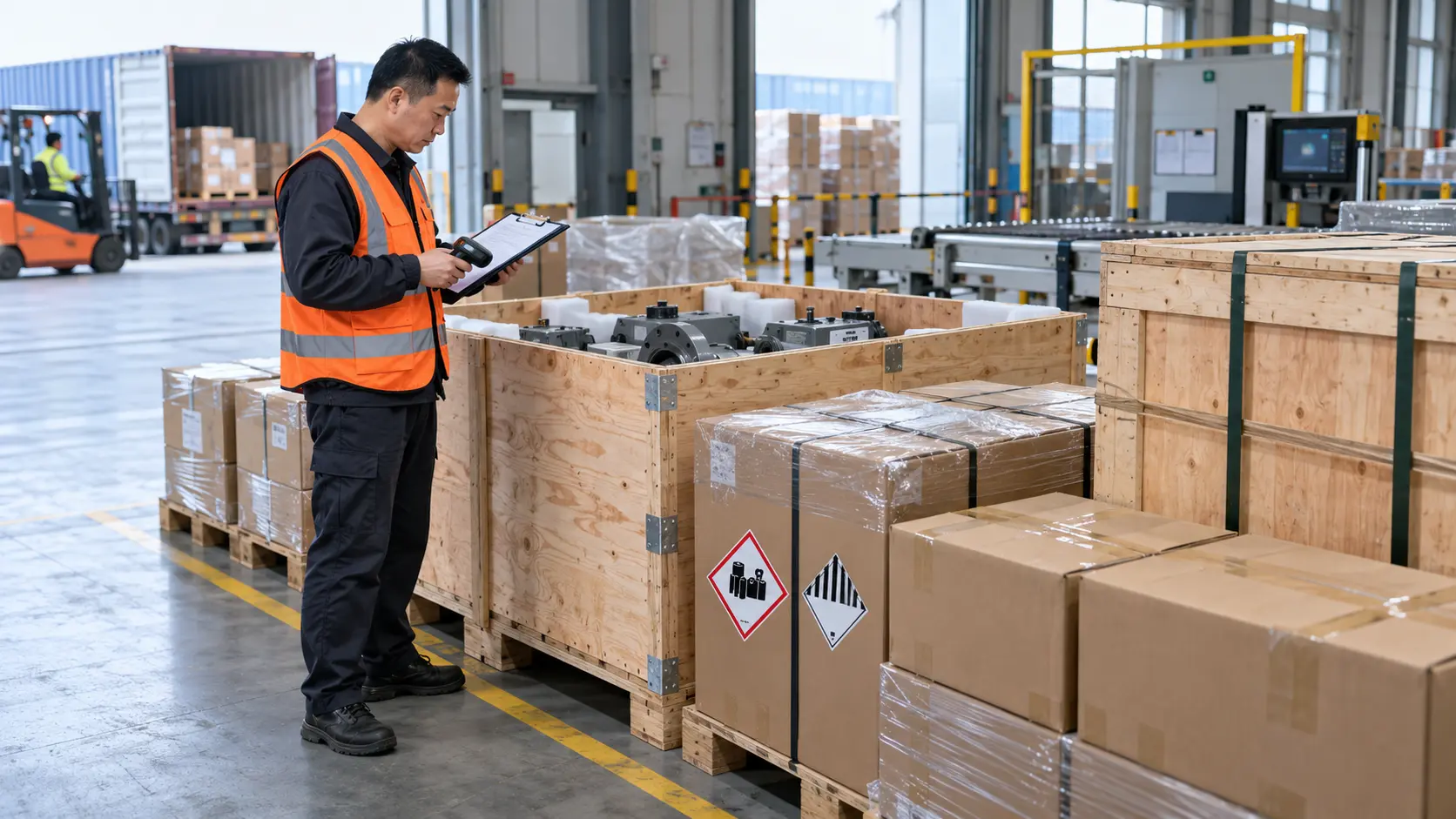
The Australian Government's BICON system is the official source for determining whether biosecurity-sensitive goods are permitted, require supporting documents or treatment, or need an import permit. BICON conditions can apply to the goods as well as packaging, containers and transport methods.
This is especially important for food, timber, bamboo, plant products, animal products, used machinery and cargo that may carry soil, seeds, insects or other contamination. If a permit is required, the importer should verify the timing before the goods arrive; some permits must be granted before arrival.
3. Confirm the Australian Import Plan Before the Cargo Leaves China
An Australian importer does not generally need a universal import licence for every shipment, but particular goods can still be restricted or subject to permits and conditions. The importer remains responsible for ensuring that the goods can lawfully enter Australia.
Before booking, send the product description and proposed documents to the appointed Australian customs broker or relevant specialist. Ask them to confirm:
- Proposed tariff classification
- Whether customs duty, GST or an import processing charge may apply
- Whether preferential tariff treatment may be available
- Whether anti-dumping or countervailing measures need investigation
- Whether a BICON case, import permit, treatment or packing declaration applies
- Whether product-specific labelling, safety or regulatory requirements apply
- Which documents must be available before arrival
For consignments above AUD 1,000, a formal import declaration and applicable charges will generally be relevant. The Australian Border Force encourages first-time or infrequent importers to use a licensed customs broker because an incorrect declaration can have financial and legal consequences.
Do not rely only on a Chinese supplier's statement that “we have exported this before.” A previous export may have involved a different country, product composition, importer, permit, tariff classification or packing method.
4. Booking and Cut-Offs Come Before China Customs Release
Once the cargo is confirmed as workable, the operational plan begins.
For sea freight, the forwarder normally coordinates the booking, equipment, pickup or warehouse delivery, loading plan and export declaration schedule. The exact sequence differs between FCL and LCL, but common deadlines include:
- Cargo or container cut-off
- Shipping instruction cut-off
- Verified Gross Mass (VGM) cut-off for containers
- Customs declaration timing
- Dangerous-goods documentation cut-off where applicable
- Terminal receiving window
The supplier's “cargo ready date” is not the same as the vessel departure date. The goods may still require collection, consolidation, checking, repacking, container loading, weighing, declaration and terminal delivery.
Missing one deadline can move the shipment to a later sailing even when a booking number already exists.
5. What China Customs Release Actually Means
China Customs release is an important milestone. It generally means that Customs has completed the required processing for the submitted export declaration and has released the declared goods from that customs-control step.
It does not necessarily mean:
- The container is already on board the vessel
- The vessel has departed
- The carrier has issued the final bill of lading
- The shipment will make the originally planned sailing
- Australian customs or biosecurity clearance has been granted
- The cargo is free from all remaining operational checks
Think of Customs release as one completed gate in a longer transport chain.
The shipment can still be affected by terminal congestion, late gate-in, document discrepancies, equipment problems, carrier load planning, a vessel omission, schedule change, transshipment delay or other operational events.
6. What Happens After China Customs Release
After release, the forwarder should continue checking several separate milestones.
Terminal acceptance and gate-in
For FCL shipments, confirm that the loaded container has entered the correct terminal before the applicable cut-off. A customs release without timely terminal entry does not secure vessel loading.
For LCL shipments, the consolidated container may contain cargo from several shippers. Your individual cargo can be cleared and received at the warehouse while the consolidator is still preparing the container and final manifest.
Carrier load planning
The terminal and carrier coordinate the final load list. A booked and customs-released container can still be rolled to a later vessel if space, weight, operational or schedule conditions change.
Actual loading and departure
Ask for confirmation that the container was loaded on board and that the vessel actually departed. Do not treat the estimated departure time shown on an early booking confirmation as the final event.
Bill of lading verification
Check the bill of lading draft carefully. The shipper, consignee, notify party, cargo description, marks, package count, weight, container number and seal number should be consistent with the commercial documents and booking instructions.
Corrections become more difficult or expensive after the carrier's documentation deadline. Confirm whether the shipment will use an original bill, sea waybill or telex/electronic release arrangement and who is authorised to request release.
7. Documents the Australian Importer Should Receive Early
Do not wait until the vessel reaches Australia to assemble the customs-clearance file.
The exact documents depend on the cargo, but a working file commonly includes:
- Commercial invoice
- Packing list
- Bill of lading or sea waybill
- Packing declaration where applicable
- Certificate of origin or origin evidence where applicable
- Treatment certificate or timber-packaging evidence where applicable
- Import permit and supporting declarations where required
- Product specifications, composition sheets, photographs or catalogues
- Insurance certificate if separately arranged
Names, addresses, values, quantities, package counts, weights and product descriptions should be consistent across documents. If the Australian broker asks a question, it is usually easier to obtain clarification from the supplier while the vessel is still in transit.
For a broader document list, read Documents Required for Shipping from China.
8. Track the Vessel, Transshipment and Arrival Notices
Ocean transit time is not just the number of days between two port names.
A shipment may involve:
- Origin-port waiting time
- Direct sailing or transshipment
- Connection waiting time at an intermediate port
- Port congestion
- Berth changes
- Customs and biosecurity processing after arrival
- Carrier and terminal release steps
Monitor the actual vessel name, voyage, departure, transshipment status and revised estimated arrival. Make sure the correct person receives carrier arrival notices and invoices.
If the consignee email is incorrect or notices are not forwarded promptly, charges can accumulate while the cargo is physically available but administratively unreleased.
9. Australian Customs Clearance and Biosecurity Are Separate Decisions
When the cargo approaches Australia, the appointed broker prepares the import declaration and supporting file. Customs processing and biosecurity intervention are related operationally, but they are not the same approval.
The Australian Border Force handles customs matters, including the import declaration and applicable duty and taxes. The Department of Agriculture, Fisheries and Forestry manages biosecurity import conditions and may direct document assessment, inspection, treatment or other action.
Possible outcomes include:
- Documentary clearance without inspection
- Request for additional information
- Customs examination
- Biosecurity inspection
- Treatment, cleaning or other direction
- Referral to another regulator
These outcomes cannot be guaranteed in advance. The practical goal is to submit accurate information early, use suitable packaging and keep the responsible parties ready to respond.

10. Customs Clearance Does Not Automatically Mean the Cargo Can Be Collected
At destination, several releases may need to align before pickup:
- Customs clearance
- Biosecurity clearance or completion of any directed action
- Carrier release
- Payment or confirmation of applicable destination charges
- Correct bill-of-lading release status
- Terminal or depot availability
- Delivery booking and receiving appointment
Your customs broker may say the entry is cleared while the carrier is still waiting for payment or document release. Alternatively, the shipping line may have released the bill while a biosecurity direction remains open.
Ask one practical question:
What exactly is still outstanding before the cargo can be collected?
That question is more useful than asking only whether the shipment is “cleared.”
11. Storage, Demurrage and Detention Need Different Attention
Delay costs can arise at different stages and under different charging rules.
- Terminal or warehouse storage relates to cargo or equipment remaining at the terminal, depot or unpack facility beyond the applicable free period.
- Container demurrage is commonly associated with the carrier's container remaining in the terminal beyond the allowed time, although terminology and charging structures vary.
- Container detention is commonly associated with keeping the carrier's container outside the terminal beyond the allowed time before empty return.
Always check the actual carrier, terminal and service-provider terms for the shipment. Do not assume every free-time period starts on the same date or is counted in the same way.
Before arrival, confirm:
- Who will receive availability and release notices
- When the relevant free time starts
- Who books the delivery slot
- Whether the receiver can unload promptly
- Whether a side-loader, crane, forklift or tail-lift is required
- Where and when the empty container must be returned
Our Destination Shipping Charges Guide explains the main checks in more detail.
12. A Practical China-to-Australia Import Checklist
Before ordering
- Identify the product precisely
- Check China export restrictions and Australian import conditions
- Confirm licences, permits, standards and treatment requirements
- Review the tariff classification with the appropriate professional
- Estimate the complete landed cost
Before booking
- Obtain the final packing list and photographs
- Declare batteries, liquids, chemicals, timber and special cargo characteristics
- Confirm FCL, LCL, air or express suitability
- Agree Incoterms and responsibility for each cost
- Appoint an Australian customs broker
Before China Customs declaration
- Reconcile invoice, packing list and booking details
- Check package count, weight, container and seal information
- Meet shipping-instruction, VGM, cargo and terminal cut-offs
- Confirm any required transport or treatment documents
After China Customs release
- Confirm terminal acceptance or LCL consolidation status
- Confirm actual vessel loading and departure
- Review and approve the bill of lading
- Send the clearance file to the Australian broker
- Monitor vessel and transshipment updates
- Prepare destination payments, delivery and empty return
Before Australian arrival
- Confirm customs and biosecurity status
- Identify every outstanding release condition
- Verify cargo availability and free-time dates
- Book delivery and confirm unloading capability
- Keep the receiver and transport provider updated
13. Frequently Asked Questions
Does China Customs release mean my container has shipped?
No. Customs release confirms an export customs milestone, but terminal gate-in, carrier load planning, actual loading and vessel departure remain separate events.
Can my supplier decide whether the goods can enter Australia?
The supplier can provide essential product information, but Australian admissibility should be checked against current official requirements and, where appropriate, with a licensed customs broker or relevant specialist.
When should I appoint an Australian customs broker?
Ideally before shipment, especially for a first import, higher-value cargo or regulated goods. Early review gives time to address classification, permits, documents and biosecurity conditions before arrival.
Can China Customs release guarantee there will be no Australian inspection?
No. China export clearance and Australian border processing are separate. Australian authorities may still assess documents, inspect cargo or direct treatment based on the goods and applicable requirements.
What should I ask my freight forwarder after release?
Ask for the container or consolidation status, terminal acceptance, actual vessel loading, actual departure, bill-of-lading status, transshipment updates and the documents already sent for Australian clearance.
14. The Import Process Is a Chain, Not a Single Approval
For a new Australian importer, the biggest mistake is treating one positive status as completion of the whole shipment.
“Supplier finished,” “booking confirmed,” “China Customs released,” “vessel arrived” and “customs cleared” are all useful milestones—but none alone means the cargo is ready at your warehouse.
A reliable freight plan assigns responsibility for every handover and keeps the importer informed about what has happened, what remains outstanding and what deadline comes next.
If you are preparing a shipment from China to Australia, send TengYoda the product description, composition, photographs, packed dimensions, gross weight, supplier city and Australian destination. We can coordinate the China-side review, pickup, consolidation and international freight plan, while working with the appointed destination representatives on the documents they require.
For official guidance, consult the Australian Border Force pages on how to import and import declarations, and check current commodity conditions in BICON. Shipment-specific requirements should be confirmed before booking.