
Combine several supplier orders into one export shipment
Importers often purchase from factories in Foshan, Guangzhou and other Chinese cities. Shipping every order separately can create duplicated handling and incomplete visibility. A consolidation warehouse provides one receiving point before the international shipment is booked or loaded.
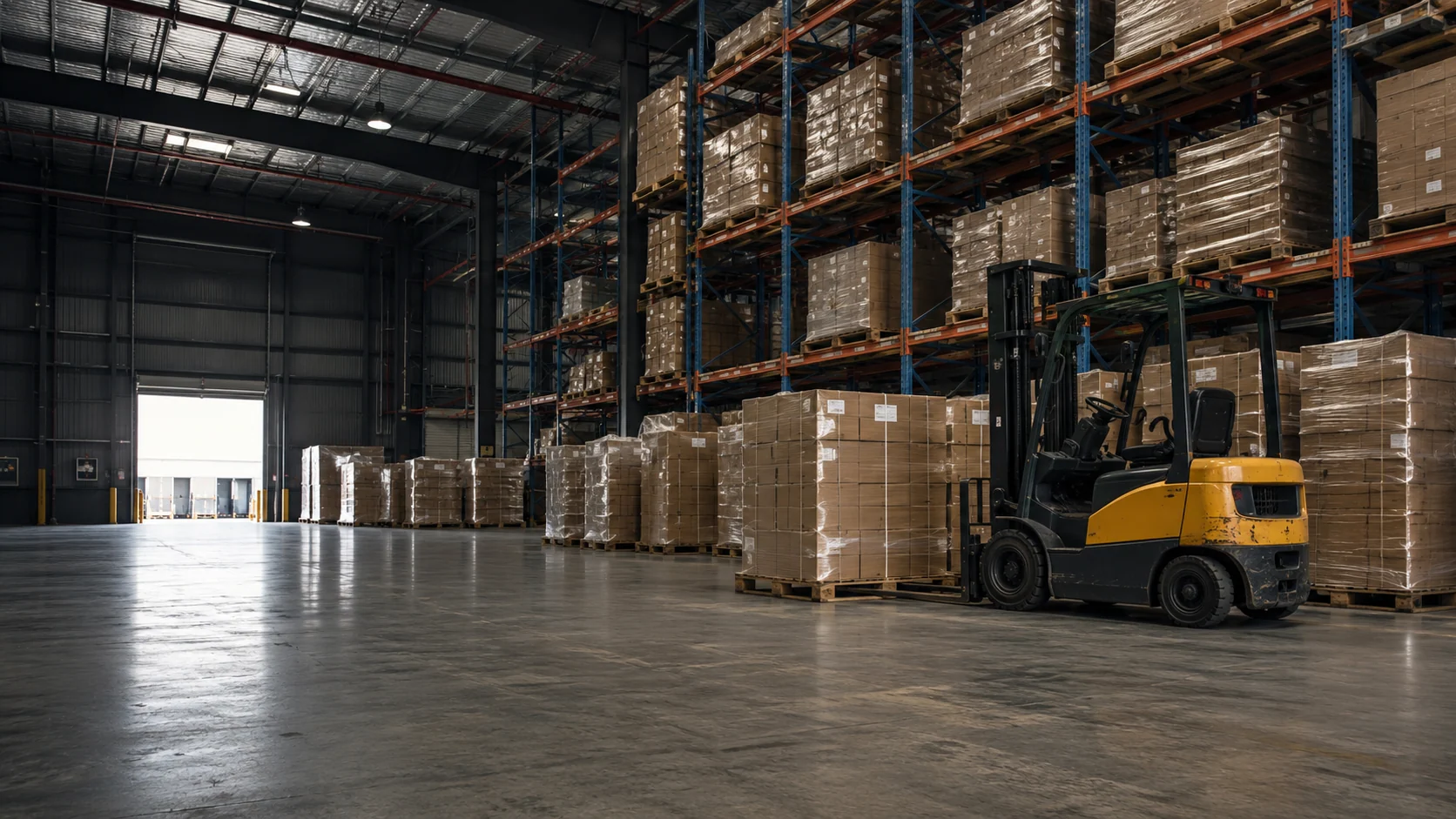
TengYoda operates two logistics warehouses in Lishui and Lecong, Foshan. Each facility covers more than 3,000 square metres and supports cargo consolidation, labelling, sorting, palletising and shipment preparation.
What happens when cargo arrives?
The agreed receiving procedure can include:
- Match the delivery to the importer and supplier reference.
- Record the number and type of packages received.
- Take arrival photographs when included in the service scope.
- Report visible carton or crate damage.
- Measure the final external dimensions and gross weight.
- Apply shipping marks or destination labels.
- Sort packages by purchase order or destination.
- Prepare the cargo for palletising, LCL handoff or container loading.
This is not automatically a product-quality inspection. Product counting, functional inspection or detailed quality control must be agreed separately before delivery.
Suitable cargo and importer profiles
Foshan consolidation is commonly useful for:
- Furniture and lighting purchased from several suppliers
- Building materials and home-improvement products
- E-commerce stock from multiple factories
- Machinery parts and small equipment
- Trial orders and commercial samples
- Buyers who need one export shipment and one set of shipping instructions
Very heavy, oversized, dangerous or temperature-controlled cargo requires prior approval and specific handling arrangements.
Supplier instructions before delivery
Every supplier should receive:
- Correct warehouse address and contact details
- Importer name or account reference
- Purchase-order number
- Required shipping mark
- Delivery appointment requirement
- Package and pallet instructions
- Cargo-ready and expected-delivery date
Suppliers should not send unidentified cargo. Missing references can delay receiving and make it difficult to match the goods to the correct shipment.
Packing and palletising review
Export packaging should protect the goods during warehouse handling, loading, vessel movement and destination delivery. Cartons should be strong enough for their weight and the expected stacking method.
If timber is used, destination biosecurity requirements must be reviewed. Plywood, compliant treated timber or non-wood alternatives may be more suitable, depending on the cargo and importing country.
Consolidation into FCL or LCL
Once the final packages have arrived, the actual volume and gross weight can be checked against the transport plan.
FCL may be considered when the combined orders justify a full container or when handling needs to be reduced. LCL may be appropriate for a smaller combined volume. The decision should consider package size, cargo value, handling risk, origin costs and destination charges.
Frequently asked questions
Can you collect directly from each supplier?
Yes, subject to the supplier locations, cargo size, loading conditions and agreed pickup scope. Suppliers can also deliver to the nominated warehouse.
Can the warehouse check product quality?
Basic receiving confirms packages and visible condition. Detailed product inspection, model verification or testing needs a separately agreed checklist and service.
Can furniture from Lecong be consolidated with other products?
Yes, after reviewing package dimensions, protection, stackability and loading compatibility with the other cargo.
Discuss a Foshan consolidation plan or review our FCL and LCL shipping options.
把多家供应商订单合并成一票出口货物
进口商经常从佛山、广州及中国其他城市的多家工厂采购。每个订单单独运输可能导致重复操作和信息分散。集运仓库可以在订舱或装柜前,为所有供应商提供一个统一收货点。
腾又达在佛山里水和乐从自营两座物流仓库,每座面积超过3,000平方米,可提供货物集运、贴唛、分类、打托和发运准备服务。
货物到仓后如何操作?
根据双方确认的收货范围,可以包括:
- 按进口商和供应商编号识别到货。
- 记录到货包装件数和形式。
- 服务范围包含时拍摄到仓照片。
- 报告肉眼可见的纸箱或木箱破损。
- 测量最终外包装尺寸与毛重。
- 粘贴唛头或目的地标签。
- 按采购订单或目的地分类。
- 为打托、拼箱交仓或整柜装柜做好准备。
上述基础收货不等同于产品质量检验。产品清点、功能测试或详细质检必须在送货前另行约定检查清单与服务范围。
适合的货物和客户
佛山集运通常适合:
- 多家供应商采购的家具和灯具
- 建筑材料与家装产品
- 多家工厂生产的电商库存
- 机械零件和小型设备
- 试单和商业样品
- 希望统一出口并使用一套发运指示的采购商
超重、超大、危险品或温控货物需要提前审核并安排专项操作。
供应商送仓前需要什么指示?
每家供应商都应收到:
- 正确的仓库地址和联系人
- 进口商名称或客户编号
- 采购订单号
- 指定唛头
- 送货预约要求
- 包装与打托要求
- 备货日期和预计到仓日期
供应商不应发送没有标识的货物,否则会延迟收货,也难以匹配到正确订单。
包装与打托核对
出口包装需要在仓库搬运、装柜、海上运输和目的地派送过程中保护货物。纸箱强度应符合重量和堆叠方式。
如果使用木材,应核实目的地生物安全要求。根据货物与进口国家,可考虑胶合板、合规处理木材或非木质替代材料。
集运后选择整柜或拼箱
货物全部到齐后,应根据最终件数、体积和毛重再次核对运输方案。
合并货量足够、货物不便多次搬运时可以考虑整柜;货量较小时可考虑拼箱。选择时应综合包装尺寸、货值、操作风险、中国端费用和目的地费用。
常见问题
能否直接到每家供应商提货?
可以,但需根据供应商位置、货物尺寸、装货条件和双方确认的提货范围评估。供应商也可以自行送到指定仓库。
仓库能否检查产品质量?
基础收货只确认包装件数和可见外观。详细产品检验、型号核对或功能测试需要另行约定清单和服务。
乐从家具能否与其他产品一起集运?
可以,但需要先核对包装尺寸、防护、能否叠放以及与其他货物是否适合共同装载。