
A freight quote may change after pickup because the cargo collected from the supplier is different from the information used for the original estimate. Final packed dimensions, verified weight, product characteristics, pickup conditions or the requested service scope may all affect the carrier's charge. However, not every price increase is automatically reasonable. A professional freight forwarder should identify the changed fact, show how it affects the calculation and obtain approval before continuing with a material additional cost whenever operationally possible. This guide explains the eight most common reasons a freight quote changes after collection, how to distinguish a genuine adjustment from an unclear surcharge, and what small importers can do before pickup to control the final shipping cost.
Quick answer: why can a freight quote change after pickup?
Most post-pickup adjustments come from a difference between the estimated shipment and the cargo that is actually handed over. The most common causes are:
- The final cartons, pallets or crates are larger than declared.
- The verified gross weight is higher than the supplier's estimate.
- The cargo contains batteries, liquids, magnets, chemicals or other special characteristics.
- The number or type of packages has changed.
- The pickup requires extra waiting, labour, equipment or a different truck.
- The original quote and the supplier's Incoterm cover different responsibilities.
- The rate has expired or the required sailing or flight is no longer available.
- Repacking, storage, inspection or other additional work becomes necessary.
A revised quote should connect the new charge to one of these facts. “The price changed” is not enough; the forwarder should explain what changed, what evidence supports it, which rate or fee applies, and whether an alternative is available.
1. Final packed dimensions are larger than the estimate
This is one of the most frequent causes of a revised LCL, air-freight or express quotation.
Suppliers often provide product dimensions, inner-carton dimensions or an early packaging estimate. The freight provider charges against the shipment it actually receives: the outer carton, pallet, wooden crate, protective foam, corner boards and wrapping all occupy transport space.
For example, an importer may request a quotation using ten cartons measuring 50 × 40 × 40 cm. The factory later places those cartons on two pallets, adds a protective top frame and shrink-wraps each unit. The cargo is safer, but the final cubic volume may be materially higher.
For rectangular packages, volume is normally calculated from external measurements:
CBM = length (m) × width (m) × height (m) × number of packages
LCL sea freight is commonly assessed using weight or measurement rules, while air and express services compare actual weight with volumetric or dimensional weight under the relevant carrier's tariff. The exact conversion factor, rounding rule and minimum charge must be confirmed for the selected service.
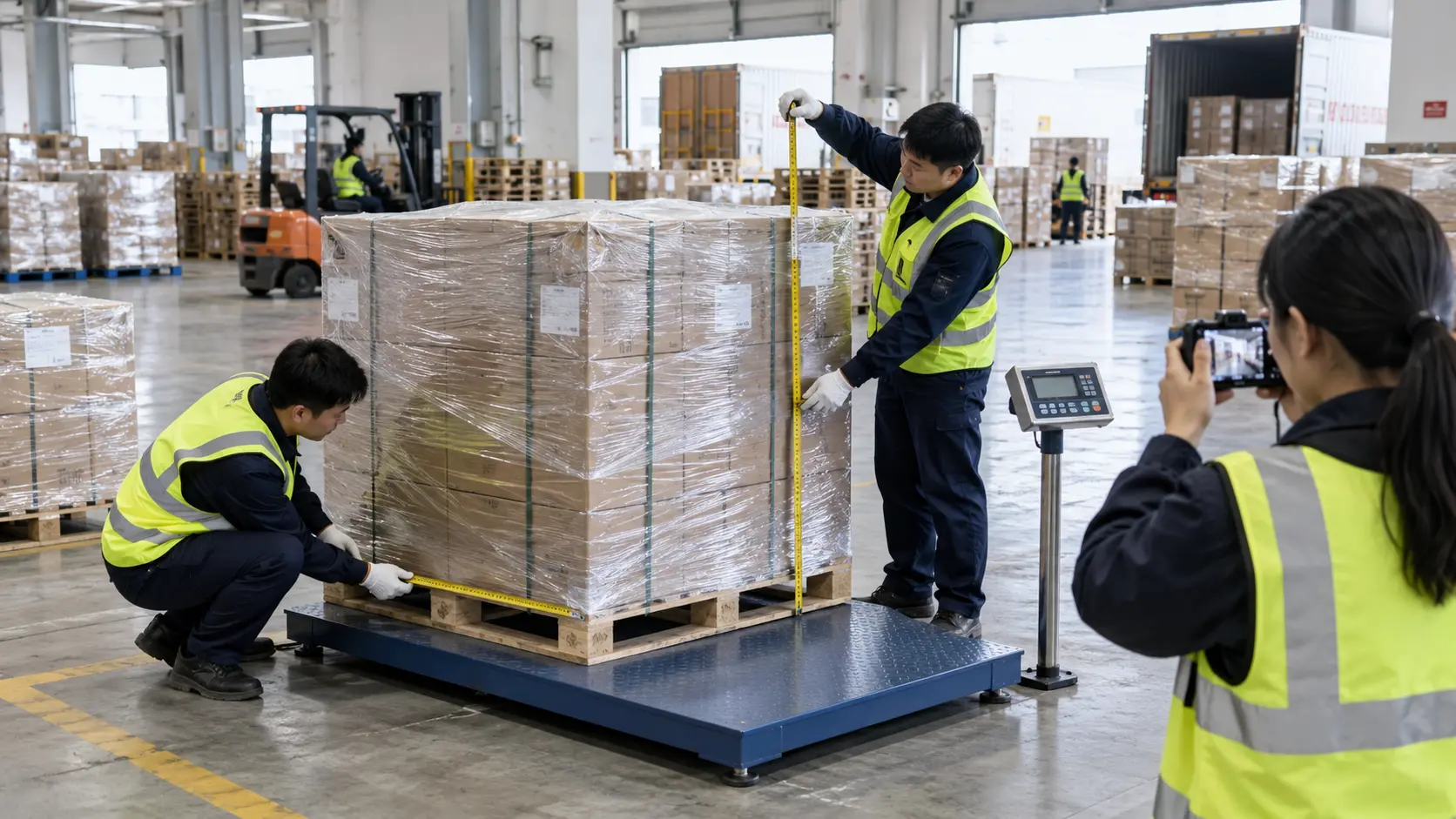
What the forwarder should provide
- Photographs showing the complete packed cargo
- External dimensions of each package type
- The calculation before and after measurement
- The rate basis or chargeable volume used
- A cheaper alternative if repacking or another transport mode is practical
An increase supported by warehouse measurements can be legitimate. A large unexplained increase without measurements is a reason to ask for evidence.
2. Actual or verified weight is higher than declared
Supplier weights can be wrong because they exclude pallets, crates, accessories, spare parts or moisture-protection materials. Some values are copied from a product catalogue and do not represent the export package.
Weight affects road collection, warehouse handling, LCL charging, air-freight chargeable weight, container payload and special-equipment planning. A shipment that crosses a vehicle, handling or carrier weight threshold may require a different operational plan rather than a simple per-kilogram adjustment.
For a packed sea container, verified gross mass is also a safety and loading requirement. The International Maritime Organization explains that the shipper is responsible for providing the verified gross mass, and that it must be available before the container can be loaded on a SOLAS-regulated ship.
Ask for:
- The weighing method and date
- A scale display or weight ticket where available
- Net cargo weight, packaging weight and total gross weight
- Container tare and VGM details for FCL shipments
- Confirmation that the weight remains within equipment and road limits
3. The product is not ordinary general cargo
The quotation may have been prepared as general cargo because the enquiry used a vague description such as “parts,” “accessories,” “equipment” or “samples.” After pickup, warehouse staff may discover a battery, liquid, powder, magnet, pressurised component, chemical substance, oil residue or another restricted characteristic.
This does not necessarily mean that the cargo cannot be shipped. It means the freight forwarder must check the correct classification, documents, packaging and carrier acceptance before confirming the service.
Potential consequences include:
- A different carrier or route
- Additional safety or screening documents
- Special packaging or labelling
- Dangerous-goods handling fees where applicable
- Separation from incompatible cargo
- A later departure because approval takes time

The importer should provide the complete product name, material, intended use, model, safety data where relevant and photographs before pickup. The forwarding team should not guess a classification from a short sales description.
A warning sign to take seriously
If a provider suggests concealing batteries, chemicals or another restricted characteristic to preserve a low rate, stop the shipment. Misdeclaration can create safety, customs, insurance and cargo-release risks that are much more serious than a revised quotation.
4. Package count or packaging method has changed
A quotation for 20 cartons is not automatically valid when the collected cargo becomes 24 cartons, two pallets and one wooden crate. The total weight may be similar, but the shipment now uses different space and handling resources.
Common changes include:
- The supplier splits heavy cartons into smaller cartons.
- Several loose cartons are palletised.
- Fragile goods are placed in wooden crates.
- Accessories or spare parts are added at the last minute.
- Two purchase orders are combined without updating the packing list.
- Packages cannot be stacked as originally assumed.
For multi-supplier orders, each supplier should use a clear shipment mark and order reference. TengYoda's China cargo consolidation service can receive separate orders, record discrepancies and confirm the combined shipment after the required goods arrive.
Read our China warehouse consolidation process for the information that should follow every supplier delivery.
5. The real pickup conditions require extra resources
A factory pickup rate assumes certain access and loading conditions. The cost can change when the driver arrives and discovers that the cargo is not ready, the loading point is different, the vehicle cannot enter, no forklift is available or the goods require manual handling.
Examples of additional work include:
- Driver waiting time beyond the included period
- A second collection after a failed pickup
- Tail-lift, crane or forklift requirements
- Manual loading labour
- Restricted delivery windows or appointment fees
- A larger truck because the packed cargo changed
- Additional distance caused by an incomplete address
Before dispatching a vehicle, confirm the supplier's complete Chinese address, contact person, loading hours, cargo-ready status, loading equipment and any access restrictions. A photograph of the packed cargo and loading area can prevent the wrong truck from being sent.
For non-standard cargo, see TengYoda's China domestic trucking and factory pickup service.
6. The Incoterm or service boundary was misunderstood
A low quote may cover only the main freight. The buyer may believe it includes factory pickup, export customs, origin terminal charges or destination delivery. The disagreement appears after pickup because the operational team must perform work that was never priced.
ICC Incoterms rules clarify the tasks, costs and risks allocated between seller and buyer, but they do not replace a detailed logistics quotation. The named place and version of the rule matter. “EXW China” is less precise than “EXW supplier address, Foshan, Incoterms 2020.”
Check whether the original quote is based on:
| Quotation basis | Typical starting point | Questions to confirm |
|---|---|---|
| EXW | Supplier premises | Loading, pickup, export declaration and origin fees |
| FCA | Named carrier handover point | Who completes export formalities and where risk transfers |
| FOB | Named port of shipment | Supplier's origin scope and buyer's main-carriage responsibility |
| Port-to-port | Origin port or terminal | Origin and destination charges outside the main freight |
| Door-to-door | Named pickup and delivery points | Clearance, taxes, unloading, access and excluded charges |
Always compare quotations using the same cargo data, Incoterm and start/end points. For a wider due-diligence review, use our guide on how to choose a reliable freight forwarder in China.
7. The rate expired or the booked service changed
International freight rates are often valid for a limited period. Ocean and air capacity, fuel-related surcharges, peak-season demand, security conditions and carrier schedules can change. A quote prepared before production may no longer be available when the goods are finally ready.
This adjustment is different from a measurement discrepancy. The forwarder should identify:
- The original rate validity
- The planned carrier, route and departure window
- What changed after the quote
- The new validity period
- Available alternatives and their transit-time trade-offs
The cargo-ready date should therefore be realistic. “Production finishes next week” is not the same as “packed cargo can be collected next week.” Inspection, export packing, labels and documents may still be outstanding.
If the rate was still valid and the shipment matched the quoted details, ask why the confirmed space or service was not available before accepting a higher price.
8. Additional warehouse or document work becomes necessary
Pickup sometimes reveals a problem that must be corrected before export. Examples include damaged cartons, weak pallets, missing shipment marks, mixed purchase orders, inconsistent documents, untreated timber packaging or cargo that cannot be safely stacked.
Possible services include:
- Repacking or pallet replacement
- Labelling or shipment marks
- Sorting and recounting
- Photography or inspection
- Short-term storage
- Crating or moisture protection
- Document amendment
- Special loading or lashing
These services should be itemised. The importer should receive a description of the problem, supporting photographs, the proposed remedy and the price before work proceeds, except where immediate action is needed to prevent damage or a missed operational cut-off.
Reasonable adjustment or red flag?
Use this comparison before approving a revised amount:
| A reasonable adjustment usually includes | A warning sign may include |
|---|---|
| New measurements, weight records or photos | No evidence of what changed |
| A clear link between the changed fact and charge | A lump-sum “extra fee” with no calculation |
| The original assumption and revised basis | The provider refuses to show the original scope |
| Advance notice and approval where practical | Cargo is held while unexplained charges increase |
| Alternatives, when available | Pressure to pay immediately without documents |
| A revised written quotation | Instructions to misdeclare the cargo |

The fact that a quotation changes does not by itself prove poor service. The quality of the explanation and evidence shows whether the shipment is being managed transparently.
How to prevent freight price changes before pickup
Small importers can prevent many disputes by sending a structured enquiry and confirming the data again when packing is complete.
Step 1: describe the actual product
Provide the commercial product name, material, use, model and special characteristics. Mention batteries, liquids, powders, magnets, chemicals, oils, pressurised parts, food, plants, animal materials, used machinery, branded goods and solid timber.
Step 2: obtain final packing details
Request the number and type of packages, external dimensions, gross weight and photographs. Do not rely only on catalogue data.
Step 3: identify the exact logistics scope
State the pickup address, destination port or postcode, Incoterm, cargo-ready date and required services. Explain unloading and delivery access conditions.
Step 4: ask for assumptions and exclusions
The quote should show the rate validity, chargeable basis, included origin services, main freight, destination scope and known exclusions.
Step 5: agree on an approval process
Tell the forwarder who may approve extra costs and how quickly approval can be obtained. Ask for photographs and a revised calculation before non-routine work begins.
Use our China freight quote checklist to prepare the complete enquiry.
A copy-and-send pre-pickup checklist
Send the following information to your supplier and freight forwarder:
- Product name, material and intended use
- Model and HS code if already reviewed
- Battery, liquid, powder, chemical, magnet or oil information
- Number and type of packages
- External dimensions of every package type
- Gross weight per package and total gross weight
- Stackable or non-stackable status
- Packaging and cargo photographs
- Complete pickup address and supplier contact
- Loading hours, loading equipment and access restrictions
- Confirmed cargo-ready date
- Incoterm with named place
- Destination port, airport or delivery postcode
- Required service scope
- Required delivery deadline
How TengYoda controls the quotation after collection
TengYoda Logistics coordinates China-side pickup, warehouse receiving, cargo consolidation and international freight for overseas importers. When cargo information needs verification, our team can compare the supplier's packing list with the shipment received, record package discrepancies, confirm final measurements and photographs, and review the transport plan before booking.
The objective is not to promise that a preliminary estimate can never change. It is to make every material change traceable:
- What information was originally provided?
- What was found after pickup?
- How does the new fact affect the transport method or charge?
- What choices remain available to the importer?
For standard containers, LCL, air freight, express, multi-supplier consolidation or non-standard cargo, TengYoda can coordinate the China-origin handoffs and provide one named contact for the shipment. Learn about our China export logistics service or send your shipment details to Vinson for a scope review.
Frequently asked questions
Can a freight forwarder change the price after pickup?
The price may need to be revised when the actual shipment, service or market-validity conditions differ from the written quotation. The forwarder should explain the difference, provide evidence and issue a revised calculation. The quotation terms and any accepted booking conditions remain important.
Why did my LCL quote increase after warehouse measurement?
LCL charges may use the final external cargo volume or weight/measurement basis. Pallets, crates and protective packaging can make the final shipment larger than the supplier's estimate. Ask for package-level measurements and the applied calculation.
Why did my air-freight price increase when the weight stayed the same?
Air freight can be charged using the higher of actual weight and volumetric weight under the selected carrier's rules. Larger final packaging can therefore increase the chargeable weight even if the scale weight is unchanged.
Should I pay an additional charge without evidence?
Ask for the changed shipment fact, supporting document or photograph, calculation and revised scope. Genuine third-party or operational costs should be identifiable. Do not approve cargo misdeclaration as a way to avoid a charge.
Can warehouse verification guarantee the final freight invoice?
Verification reduces measurement and cargo-description errors, but cannot eliminate every variable. Carrier schedule changes, customs action, examinations, storage, delivery access and services requested later can still affect the final cost. Clear assumptions and prompt communication remain essential.
References
- International Maritime Organization: verification of the gross mass of a packed container
- International Chamber of Commerce: Incoterms rules
*This article provides general logistics information, not legal, customs or insurance advice. Carrier acceptance, local regulations and the final service scope must be confirmed for each shipment.*