
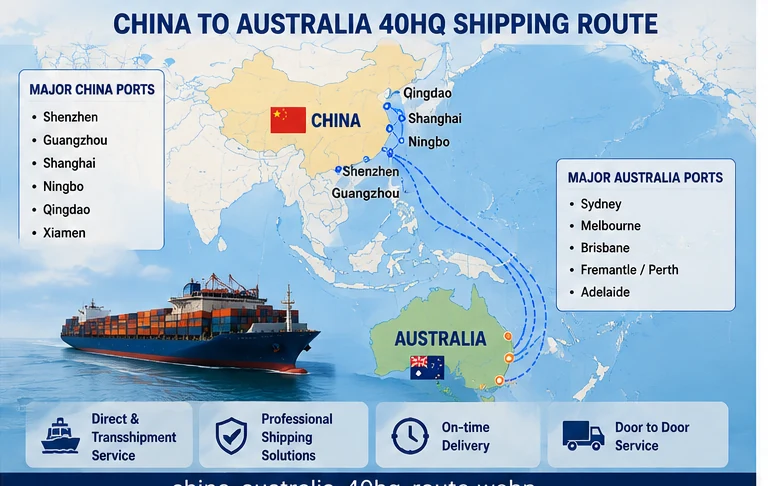
A practical China-to-Australia shipping service
Shipping from China to Australia involves more than reserving space on a vessel. The importer needs consistent commercial documents, suitable packaging, biosecurity preparation, destination clearance planning and delivery arrangements before the cargo arrives.
TengYoda coordinates the China-side shipment and works with the agreed destination-side parties so that supplier pickup, consolidation, export handling and international freight form one workable plan.
What we can coordinate
- Pickup from factories and suppliers in China
- Receiving and consolidating orders at our Foshan warehouses
- FCL bookings for 20GP, 40GP and 40HQ containers
- LCL consolidation for smaller orders
- Export customs declaration coordination
- Commercial-document checking
- Carrier schedule and transshipment review
- Pre-arrival document handoff to the Australian broker
- Customs-clearance and delivery arrangements when included in the quotation
Australia-specific risks to check before shipping
Biosecurity and wooden packaging
Australia applies strict biosecurity controls. Used machinery, outdoor equipment, plant materials, food, bamboo and solid-wood packaging may need special review. Cargo and packaging should be clean, dry and free from soil or contamination.
Do not use unidentified solid timber for pallets, crates or supports. Confirm the applicable treatment, marking and documentation requirements before collection.
Destination charges
Ocean freight is only one part of the landed logistics cost. Depending on the shipment, the importer may also face terminal charges, shipping-line fees, customs clearance, duty, GST, biosecurity fees, inspections, delivery, unloading, storage and container detention.
Ask for a quotation that clearly separates included charges from exclusions.
Documents and cargo description
The commercial invoice and packing list should agree on product descriptions, package quantities, gross weight and value. Avoid vague descriptions such as “parts” or “accessories.” Identify the product, material and use clearly enough for the broker to assess the import requirements.
FCL or LCL for Australian imports?
FCL can be suitable for larger orders, difficult-to-handle cargo or shipments that benefit from fewer cargo-handling points. Actual usable capacity depends on package dimensions, weight distribution and loading method.
LCL can be suitable for samples, trial orders and multi-supplier purchases. The importer should compare origin consolidation and Australian destination handling charges as well as the international freight.
Information required for a quotation
Please send:
- Product name, material and intended use
- Supplier city or pickup address
- Number of packages
- Dimensions and gross weight per package
- Total volume and gross weight
- Cargo-ready date
- Australian destination port or delivery postcode
- Incoterm and required delivery scope
- Packaging and product photographs
Typical shipment sequence
- Confirm the supplier's realistic cargo-ready date.
- Review the packed dimensions, weight and product details.
- Check destination import and biosecurity requirements.
- Select FCL or LCL and confirm the quotation scope.
- Collect or receive the cargo at the consolidation warehouse.
- Complete export procedures and hand the cargo to the carrier.
- Send final documents to the Australian customs broker.
- Pay required destination invoices and government charges.
- Obtain cargo release and arrange delivery before free time expires.
Frequently asked questions
Does CIF include Australian clearance and delivery?
Normally, CIF covers the agreed cost, insurance and freight to the named destination port. It does not automatically include all destination charges, clearance, duty, GST or delivery.
Can several Foshan suppliers be shipped together?
Yes. Goods can be received at our Lishui or Lecong warehouse, checked against supplier references and prepared for one FCL or LCL shipment.
How long does shipping take?
Transit time varies by origin port, Australian port, carrier and transshipment route. A complete plan should also allow time for pickup, consolidation, export procedures, clearance and delivery.
Ask TengYoda to review your China-to-Australia shipment or read the complete China to Australia importer guide.
实用的中国到澳大利亚运输服务
中国到澳大利亚运输不仅是向船公司订舱。货物到港前,进口商还需要准备一致的商业单证、合适的包装、生物安全资料、目的地清关计划和派送安排。
腾又达协调中国端运输,并与确认的目的地服务方衔接,使供应商提货、仓库集运、出口操作和国际运输形成一套可执行方案。
我们可以协调的环节
- 中国工厂和供应商提货
- 在佛山仓库接收并合并多家供应商订单
- 20GP、40GP和40HQ整柜订舱
- 中小订单拼箱集运
- 出口报关协调
- 商业单证核对
- 船期与中转线路检查
- 到港前向澳大利亚清关行交接单证
- 报价包含时协调清关和派送
发货前需要核对的澳洲风险
生物安全与木质包装
澳大利亚执行严格的生物安全管理。二手机械、户外设备、植物材料、食品、竹制品和实木包装可能需要专项审核。货物与包装应保持清洁、干燥,不得带有泥土或污染物。
托盘、木箱或支撑物不要使用来源不明的实木。提货前应核实适用的处理、标识和单证要求。
目的港费用
海运费只是落地物流成本的一部分。根据货物情况,进口商还可能承担码头费、船公司费用、清关费、关税、GST、生物安全费用、查验费、派送费、卸货费、仓租和滞箱费。
报价应清楚区分包含项目和除外项目。
单证与货物描述
商业发票和装箱单中的品名、件数、毛重和货值应保持一致。避免只写“零件”或“配件”等笼统描述,应明确产品、材质和用途,方便清关行判断进口要求。
澳洲进口选择整柜还是拼箱?
货量较大、货物不便多次搬运,或者希望减少操作环节时,整柜可能更合适。实际可装数量取决于包装尺寸、重量分布和装柜方式。
样品、试单和多供应商小订单可以考虑拼箱。比较方案时,除国际运费外,还应计算中国端集运费和澳洲目的地操作费。
报价所需资料
请提供:
- 品名、材质和用途
- 供应商城市或提货地址
- 包装件数
- 每件尺寸与毛重
- 总体积和总毛重
- 备货日期
- 澳洲目的港或派送邮编
- 贸易条款和所需服务范围
- 包装及产品照片
常见运输流程
- 确认供应商实际可提货日期。
- 核对包装后尺寸、重量和产品资料。
- 核实澳洲进口及生物安全要求。
- 选择整柜或拼箱并确认报价范围。
- 提货或送入集运仓。
- 完成出口手续并交给承运人。
- 将最终单证发送给澳洲清关行。
- 支付目的港和政府费用。
- 取得放货文件,并在免费期内安排派送。
常见问题
CIF是否包含澳洲清关与派送?
通常CIF覆盖货物运至指定目的港的成本、保险和运费,并不会自动包含全部目的港费用、清关、关税、GST和派送。
能否把佛山多家供应商的货物一起发运?
可以。货物可送到里水或乐从仓库,按照供应商编号核对后组合成一票整柜或拼箱运输。
海运需要多长时间?
时效取决于中国起运港、澳洲目的港、船公司和中转线路。完整计划还应计算提货、集运、出口手续、清关和派送时间。
请腾又达评估您的中澳运输,或查看完整的中国到澳大利亚进口指南。