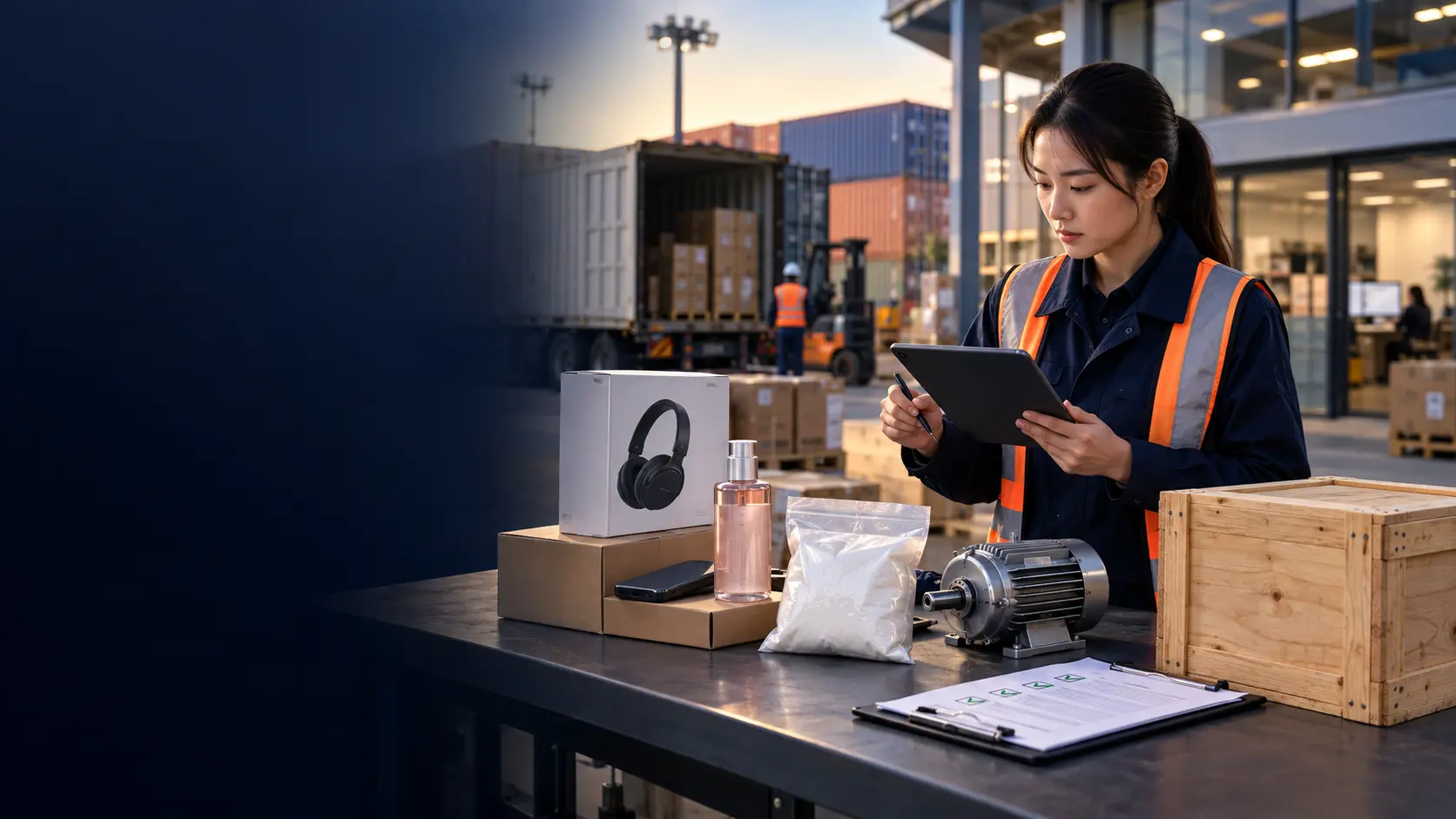
An overseas buyer finds a competitive supplier, pays a deposit and asks for shipping. Only then does someone notice that the product contains a battery, liquid, powder, magnet, refrigerant, oil residue or controlled component. The supplier says it can be exported; the airline, shipping line or courier says it cannot accept the cargo as declared. This does not always mean the product is illegal to export. It may mean that the shipment needs a different description, document, package, carrier, route or transport mode. It may also mean that the destination country requires a permit that the importer has not obtained. The safest question is therefore not simply, “Can my product be exported from China?” It is: > Can this exact product, in this quantity and packaging, be legally exported from China, accepted by the selected carrier and imported at the destination using the documents currently available? This guide gives small and medium-sized importers a practical restricted-cargo checklist to use before pickup, consolidation or booking.
Quick answer
A product can normally move only after it passes four separate checks:
- China export check: Is the product prohibited, controlled or subject to an export licence or inspection?
- Cargo and document check: Is the product accurately described, classified, packed, marked and supported by the required documents?
- Carrier acceptance check: Will the selected airline, courier, consolidator or shipping line accept it on this route?
- Destination import check: Can the consignee legally import and clear it under the destination country's current rules?
Passing one check does not guarantee the other three. A customs export declaration may be possible while a particular carrier still refuses the cargo. A carrier may accept it from China while the destination customs or another regulator requires an import permit.
“Restricted” does not always mean “prohibited”
Importers often use *restricted cargo*, *sensitive cargo* and *dangerous goods* as if they mean the same thing. They do not.
| Cargo status | What it usually means | Possible result |
|---|---|---|
| Ordinary cargo | No declared dangerous or controlled characteristics | Standard service may be available after normal verification |
| Conditional or sensitive cargo | Carrier wants more information or applies its own restrictions | Special documents, packaging, route or surcharge may be needed |
| Dangerous goods | Classified under applicable transport rules | Approved packaging, labels, declaration and trained handling may be required |
| Controlled or licence-required goods | Government authorisation may be needed | Ship only after the correct licence or approval is confirmed |
| Prohibited or illegal goods | Shipment is not legally permitted | Do not collect, conceal or ship the cargo |
“Sensitive cargo” is often a commercial carrier term, not a legal classification. A forwarder saying “we need to check it” is not necessarily refusing the shipment. It means the final route and price should wait until the cargo facts are confirmed.
The four approvals every importer should understand
1. China law and export-control approval
The exporter must determine whether the product is prohibited, controlled or licence-dependent under current Chinese rules. The answer can depend on the product's specifications, technology, end use, end user and destination—not only its trading name or HS code.
High-technology equipment, dual-use items, chemicals, biological materials, cultural goods and other regulated categories may require specialist review. Never split, rename or undervalue a shipment to avoid a required licence.
2. Accurate classification and supporting documents
“Machine parts,” “accessories” or “samples” are rarely enough for a reliable cargo review. The forwarder and carrier may need the exact product, composition, function, model and transport characteristics.
For example, a product described as “electronic accessories” could be:
- An unpowered plastic phone stand
- Bluetooth headphones containing lithium-ion cells
- Loose power banks
- Replacement lithium batteries packed alone
Those four shipments can have very different acceptance and document requirements.
3. Carrier and route acceptance
Carrier acceptance is an operational decision as well as a regulatory one. It can change according to:
- Sea, air, rail, road or express mode
- Battery configuration and watt-hour rating
- Dangerous-goods class and quantity
- Inner and outer packaging
- Direct service or transshipment route
- Aircraft or vessel restrictions
- Carrier policy and available capacity
- Origin, transit and destination terminals
A document accepted by one airline does not automatically secure acceptance by every airline. Likewise, an ocean carrier may accept a product on one service but not another.
4. Destination import approval
China export clearance is not destination import clearance. The buyer or appointed customs broker should confirm the HS classification, duty and tax, importer licence, product registration, labelling, quarantine, biosecurity and local-standard requirements before shipment.
Food, supplements, cosmetics, medical products, timber, plants, animal products, chemicals and radio or telecom equipment are common examples requiring destination-specific checking. If you need a complete transport scope, the door-to-door shipping guide explains which customs and destination tasks may still be excluded.
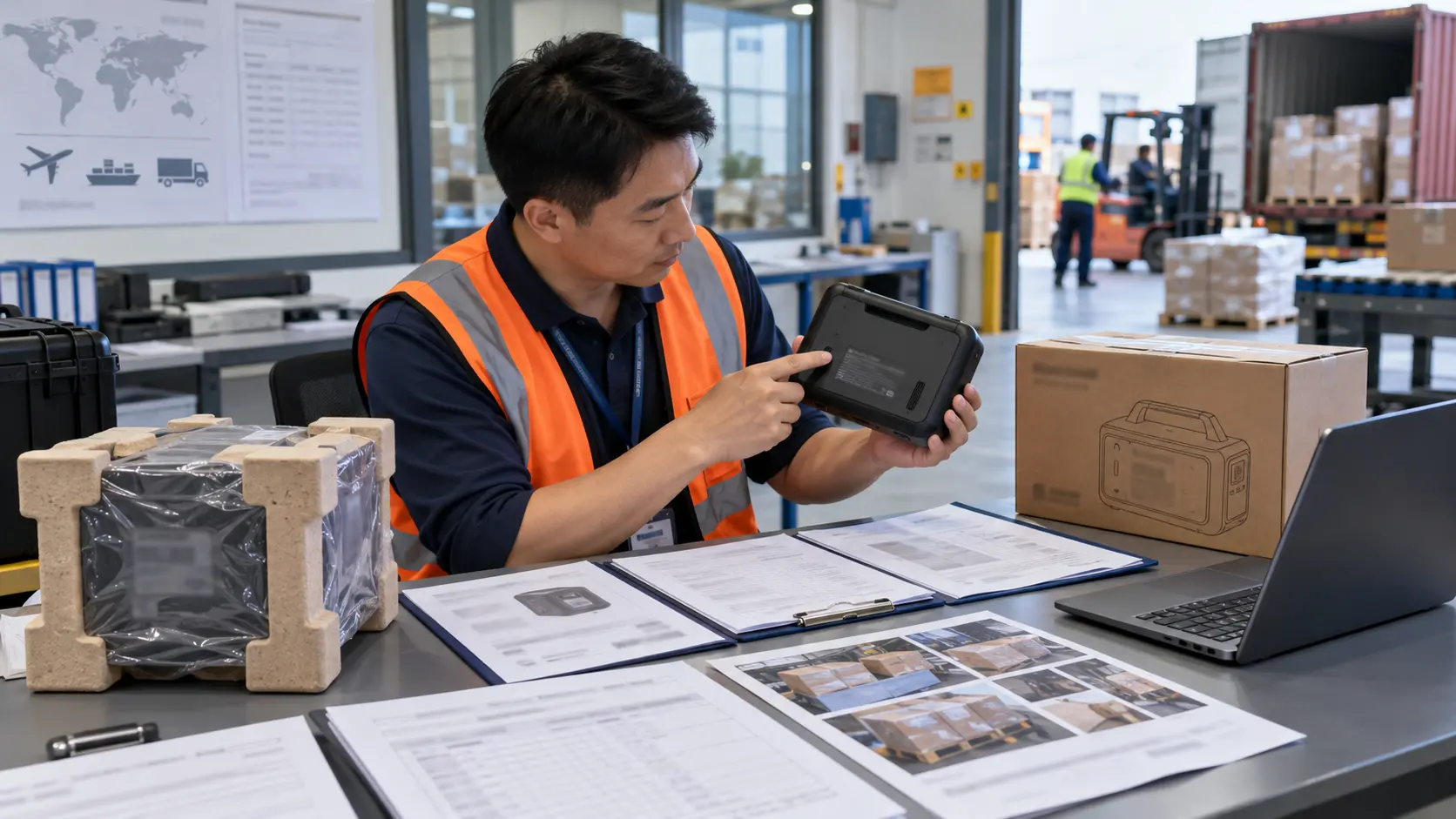
Product categories that need an early cargo check
The following list is a screening guide, not an exhaustive legal list. Requirements change and must be confirmed for the actual shipment.
| Product or characteristic | Information to provide early | Possible concern |
|---|---|---|
| Batteries and battery-powered goods | Chemistry, configuration, Wh rating, model, quantity and test documents | Dangerous-goods classification, state of charge, packaging and carrier limits |
| Liquids, gels, creams and aerosols | Composition, volume, concentration, flash point and SDS where relevant | Flammability, leakage, pressure and carrier restrictions |
| Powders and chemicals | Exact chemical name, composition, use and SDS | Unknown substance, dangerous classification or security screening |
| Magnets or magnetic products | Magnetic strength or test information and packing method | Air-transport magnetic-field limits |
| Engines, machinery and vehicle parts | New/used status; fuel, oil, battery or refrigerant residues | Leakage, dangerous residue, contamination and handling |
| Food, tea, spices and supplements | Ingredients, processing, origin, packaging and destination | Food registration, quarantine, labelling or import permit |
| Cosmetics and medical goods | Ingredients, function, claims, brand and certificates | Product registration, airline acceptance and destination regulation |
| Timber, plants and animal products | Species, treatment and origin documents | Biosecurity, CITES, fumigation or quarantine controls |
| Branded goods | Brand owner, purchase evidence and authorisation | Counterfeit or intellectual-property risk |
| High-tech or dual-use equipment | Technical specification, end use, end user and destination | Export-control classification or licence |
| Oversized or heavy equipment | Transport dimensions, weight, lifting points and condition | Equipment availability, lashing, route and port acceptance |
| Cylinders and pressure equipment | Contents, pressure, valve condition and certification | Dangerous-goods rules and carrier refusal |
Batteries and battery-powered products
Lithium batteries are one of the most frequent causes of a late booking problem because “contains a battery” does not provide enough information.
Confirm whether the shipment contains:
- Cells or batteries packed by themselves
- Batteries packed with equipment
- Batteries installed in equipment
- Power banks, which are generally treated as batteries rather than ordinary accessories
- Damaged, defective, recalled, prototype or waste batteries
- Lithium-ion, lithium-metal or sodium-ion technology
Also provide the manufacturer, model, quantity, individual watt-hour rating or lithium content, battery weight, packaging configuration and available UN 38.3 test summary. Depending on the shipment, a carrier may request further dangerous-goods documents, marks, labels, approved packaging or state-of-charge controls.
The International Air Transport Association states that battery shippers must understand correct classification, packing, marking, labelling and documentation. Do not allow a supplier to hide batteries or describe battery cargo as ordinary general cargo. If one route cannot accept it, ask whether compliant sea freight, a qualified dangerous-goods service or a different configuration is feasible.
Liquids, gels, creams and aerosols
A liquid is not automatically dangerous, and “non-dangerous” is not automatically accepted. The review should identify the substance, ingredients, concentration, flash point where relevant, package size, total quantity and leak-resistant packing.
Perfume, paint, adhesive, cleaning products, ink, essential oils, cosmetics and aerosol cans can each require different treatment. A carrier may ask for an SDS, transport assessment or non-dangerous declaration. Aerosols and pressurised containers deserve particular attention.
For samples, do not rely on the supplier's statement that “we ship this every day.” Ask which carrier, mode, classification and documents were used for cargo with the same formulation and packaging.
Powders and chemicals
“White powder” is not a usable cargo description. State the commercial and chemical name, composition, intended use, form, concentration and manufacturer. Provide an up-to-date SDS when applicable.
Even a non-dangerous powder may trigger additional security inspection or carrier review because its identity is not visually obvious. Food powders, pigments, mineral powders, laboratory chemicals and metal powders do not share one transport rule.
If the supplier cannot clearly identify a substance, pause the pickup. A cheap freight rate does not compensate for the risk of undeclared or misclassified material entering a shared warehouse or transport network.
Magnets and magnetic products
Speakers, motors, magnetic assemblies, medical devices and industrial components can produce a magnetic field. Air transport may require testing or a magnetic inspection report depending on the product and packing.
The finished package matters: shielding, orientation and separation can change the measured field. Provide product photos, magnet specifications and final package dimensions before requesting an air quote. Sea freight may be an alternative, but the carrier still needs an accurate product description.
Used machinery, engines and vehicle parts
Used equipment can appear harmless while retaining fuel, oil, hydraulic fluid, coolant, batteries or refrigerant. Residues may leak during handling, contaminate other cargo or change the transport classification.
Before pickup:
- Drain or manage fluids as required for the selected mode.
- Disconnect, protect or remove batteries according to the approved plan.
- Clean soil, plant matter, oil and loose contamination.
- Secure moving parts and protect exposed pipes or ports.
- Provide the model, serial number, value, condition and intended use.
- Photograph the equipment before packing and after securing.
Oversized machinery also needs transport dimensions, weight, lifting points, centre-of-gravity information and loading facilities. TengYoda can review oversized and heavy machinery transport or RoRo and project-cargo options when a standard container is not suitable.
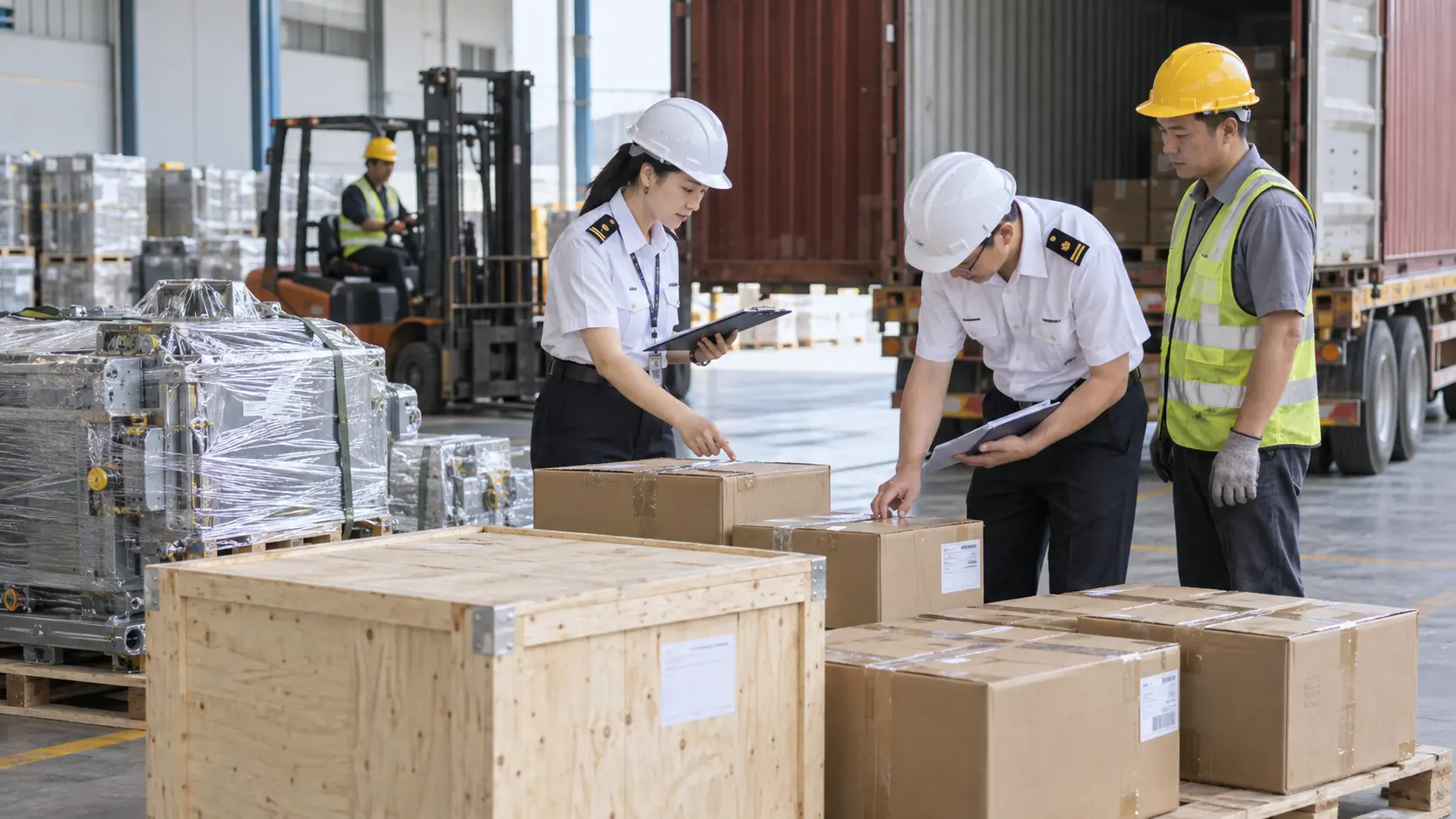
Food, cosmetics, medical, timber and agricultural goods
These products can be physically easy to move but difficult to import. The destination may regulate ingredients, claims, labels, manufacturing sites, shelf life, treatment, species or sanitary certificates.
Wood packaging also deserves attention. Many destinations apply ISPM 15 requirements to solid-wood packaging. Processed wood products and solid-wood pallets are not necessarily treated in the same way. Confirm the destination rule and make sure any required treatment mark is genuine and legible.
For plant or animal products, confirm whether protected-species controls such as CITES could apply. A commercial invoice alone is not proof that the shipment is importable.
Branded products and intellectual-property risk
Genuine goods may still need purchase evidence or authorisation. Counterfeit goods, unauthorised logo use and unclear parallel-trade arrangements can cause customs detention or carrier refusal.
Provide brand, model, supplier invoice and authorisation where applicable. A freight forwarder should not help remove labels, use false descriptions or route cargo to conceal an intellectual-property issue.
Controlled, prohibited and unlawful goods
Weapons, explosives, narcotics, counterfeit goods and other unlawful products are not a “special line” opportunity. They should be declined.
For equipment, software, materials or technology that may have military, nuclear, aerospace, surveillance or other dual-use applications, obtain a proper export-control review. The declared end user and end use can matter as much as the product name.
If a transaction involves a sanctioned party, unusual payment chain, unclear end user or request to hide the destination, stop and obtain qualified compliance advice. TengYoda's role is to develop a compliant transport plan, not to bypass controls.
Sea freight, air freight and express may give different answers
| Mode | Useful for | Common restriction issue |
|---|---|---|
| Express courier | Small samples and parcels | Strict network rules, battery configuration, liquid/powder restrictions and remote destinations |
| Air freight | Urgent and higher-value commercial cargo | Dangerous-goods classification, security screening, package and aircraft limits |
| LCL sea freight | Smaller non-urgent commercial shipments | Consolidator rules, shared-container risk, dangerous or contamination-sensitive cargo |
| FCL sea freight | Larger cargo or cargo needing separation | Shipping-line declaration, container packing, segregation and port acceptance |
| RoRo or project cargo | Vehicles, mobile and oversized equipment | Operational condition, fuel/battery rules, securing and route availability |
The International Maritime Dangerous Goods Code addresses matters including classification, packing, marking, documentation, stowage and segregation of packaged dangerous goods at sea. It is updated on a regular cycle. A shipment planned months earlier should therefore be checked again before booking.
Do not assume that changing modes makes a restricted product ordinary cargo. The correct classification and declaration still apply.
Documents that may be requested
| Document or evidence | Typical purpose | Important limitation |
|---|---|---|
| Commercial invoice and packing list | Value, parties, product, quantity and packages | Descriptions must match the actual cargo |
| SDS/MSDS | Substance composition, hazards and handling information | An SDS alone does not guarantee carrier acceptance |
| UN 38.3 test summary | Battery design test evidence | Must relate to the actual cell or battery model |
| Dangerous-goods declaration | Formal transport declaration where required | Must be prepared and signed by a qualified responsible party |
| Transport conditions assessment | Supports a carrier's cargo review | Format and validity can vary by carrier and mode |
| Export licence or permit | Government approval for controlled exports | Product, exporter, end user and destination conditions may apply |
| Brand authorisation or purchase evidence | Supports genuine-goods review | Does not replace destination trademark advice |
| Treatment or phytosanitary evidence | Supports timber or agricultural compliance | Destination requirements must be confirmed |
| Product certificates or registrations | Supports destination product compliance | One country's certificate may not work in another |
Document names and validity requirements vary. Ask the selected carrier and destination broker what they require for the exact product and route.
The information to send before requesting a quote
Use this checklist before the goods leave the supplier:
- Exact product name in plain language
- Material, composition and intended use
- Brand, model and new or used condition
- HS code candidate, commercial value and country of origin
- Battery chemistry, configuration, Wh rating and quantity
- Liquid, powder, chemical, oil, gas, magnet or refrigerant details
- Package count, packed dimensions, net and gross weight
- Clear photos of the product, labels, packaging and plugs/connectors
- Supplier/exporter name, pickup city and cargo-ready date
- Destination country, city, postcode and intended transport mode
- Importer status and destination broker contact, if appointed
- Available SDS, UN 38.3, test reports, licences and certificates
Use the freight quotation information checklist to give every provider the same shipment facts. If the final warehouse measurements or cargo details differ, read why a freight quote can change after pickup.
Three practical examples
Example 1: Bluetooth speakers described as “plastic accessories”
The supplier's invoice omits the installed lithium batteries. The original courier quote is therefore invalid. The importer should provide battery specifications and UN 38.3 information, then request a compliant battery-service review. The solution may still be express, air or sea—but it must be based on the real product.
Example 2: A used diesel engine with oil residue
The engine is not automatically prohibited, but the condition matters. The shipper should confirm drainage, cleaning, packing and any remaining batteries or fluids. The carrier and destination biosecurity requirements should be checked before collection.
Example 3: Cosmetic cream sold as a general sample
The product may need ingredient and SDS review for transport, while the destination may separately require cosmetic registration or compliant labelling. Carrier acceptance does not confirm that the importer may sell the product.
What happens when special cargo is declared too late?
Late disclosure can cause:
- Pickup cancellation or warehouse rejection
- Repacking, testing, labelling and document costs
- Loss of the booked sailing or flight
- Storage and return-to-supplier charges
- Customs inspection or document amendment
- Carrier penalties or cargo disposal in severe cases
- Insurance problems after a loss
- Destination seizure, return or destruction
The lowest-risk time to identify special cargo is before purchase or deposit. The second-best time is before pickup. Waiting until cargo reaches a warehouse removes options and adds cost.
How TengYoda reviews a China export shipment
TengYoda Logistics helps overseas importers turn incomplete supplier descriptions into a shipment profile that carriers and destination partners can review.
Our practical process is:
- Collect the product description, composition, photos and technical information.
- Identify batteries, liquids, powders, magnets, residues, brands and other special characteristics.
- Review the supplier's available transport and export documents.
- Compare express, air freight, sea freight or special-cargo options where appropriate.
- Confirm the operational scope with the selected warehouse, carrier and destination partner.
- Explain what is confirmed, what remains conditional and what the importer must arrange.

We do not issue government licences, laboratory reports or legal opinions, and we cannot guarantee customs or carrier approval. We can, however, identify questions earlier, coordinate the China side and avoid booking an ordinary-cargo service for a product that needs specialist handling.
For a pre-shipment review, send the checklist above through the TengYoda enquiry form. Photos and technical sheets are more useful than a message saying only “please quote shipping.”
Frequently asked questions
Can batteries be exported from China?
Many batteries and battery-powered products can be shipped, but acceptance depends on chemistry, configuration, rating, condition, quantity, packaging, documents, mode, route and carrier. Loose, installed and packed-with-equipment batteries may be treated differently.
Can liquids and powders be shipped from China?
Some can, after their identity, composition, hazards, quantity and packaging are reviewed. The carrier may request an SDS or transport assessment. Never describe an unknown powder or liquid as ordinary cargo merely to obtain a lower rate.
Does an HS code prove that a product can be exported?
No. The HS code supports customs classification, but transport acceptance and export-control decisions may require technical specifications, dangerous-goods classification, end-use information and route-specific review.
If China customs releases the cargo, is destination clearance guaranteed?
No. China export formalities and destination import formalities are separate. The importer should confirm licences, product rules, duty, tax and regulatory requirements with a qualified destination broker or authority.
Can a forwarder arrange the required certificates?
A forwarder may coordinate information or refer the shipper to a qualified testing or certification provider. The manufacturer, exporter, importer or licensed specialist must remain responsible for accurate data and legally required declarations.
What should I do if the supplier will not provide an SDS or battery report?
Do not collect or book the cargo as ordinary goods. Ask the supplier to identify the manufacturer and exact model, then confirm what evidence the selected carrier requires. If reliable information cannot be obtained, the safest decision may be not to ship.
Final restricted-cargo checklist
Before pickup, confirm that:
- The product description matches the actual goods.
- Batteries, liquids, powders, chemicals, magnets and residues are disclosed.
- The exporter has checked any licence or control requirement.
- Required test reports and transport documents match the model shipped.
- Packaging, marks and labels suit the approved mode.
- The selected carrier has accepted the cargo and route.
- The destination broker has checked import permits and product rules.
- The quote identifies special handling, testing and document costs.
- No party has asked for concealment, misdescription or undervaluation.
A product is ready for export only when the legal, documentary, carrier and destination pieces agree. Confirming those pieces early usually costs less than solving the problem after pickup.
References and practical note
- International Air Transport Association: Batteries
- International Maritime Organization: Dangerous goods and the IMDG Code
This article provides general logistics information, not legal, customs or dangerous-goods advice. Regulations, control lists and carrier policies change. Confirm the current requirements for the actual product, parties, route and destination with the exporter, carrier, customs broker and relevant authorities before shipping.