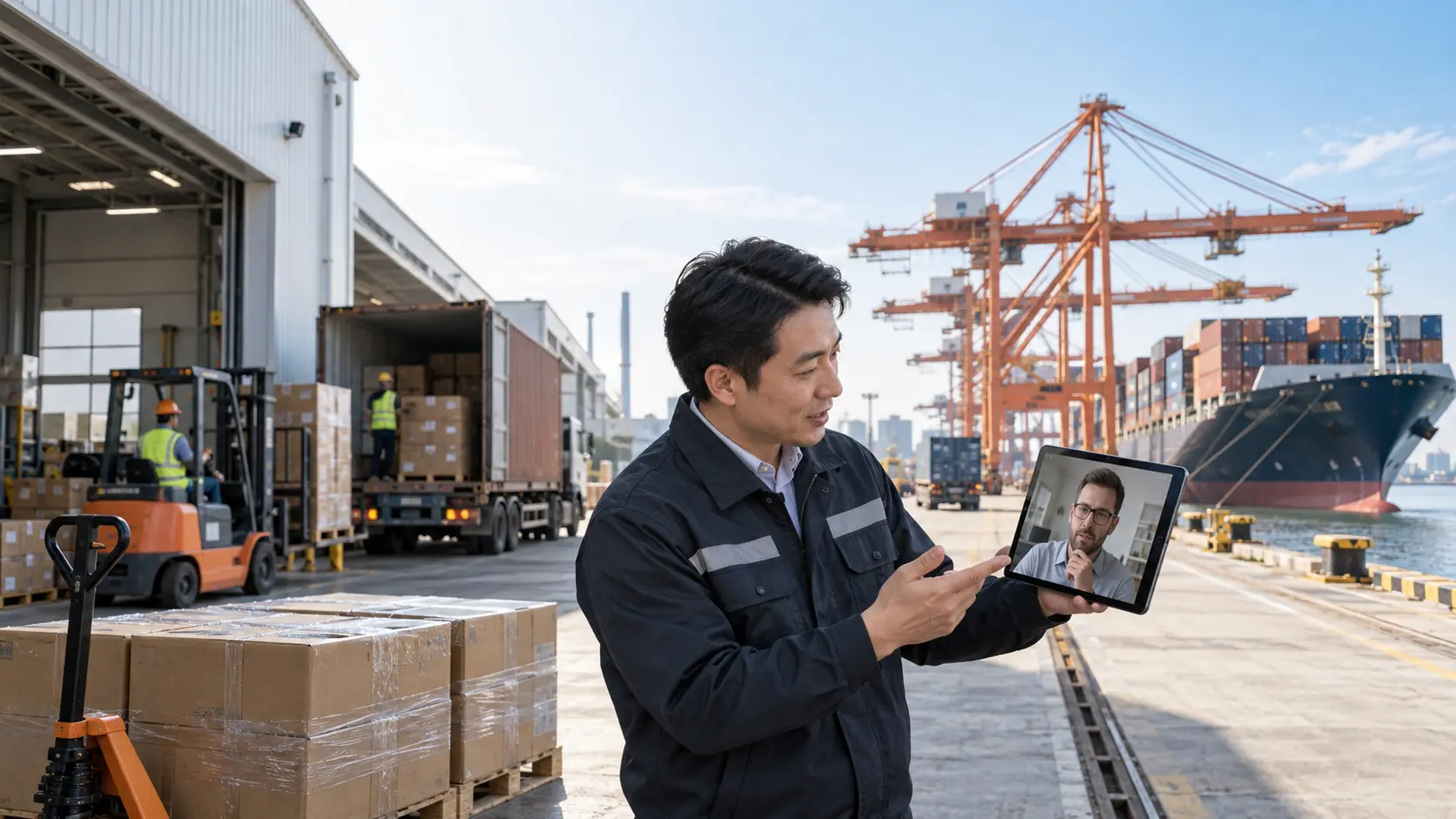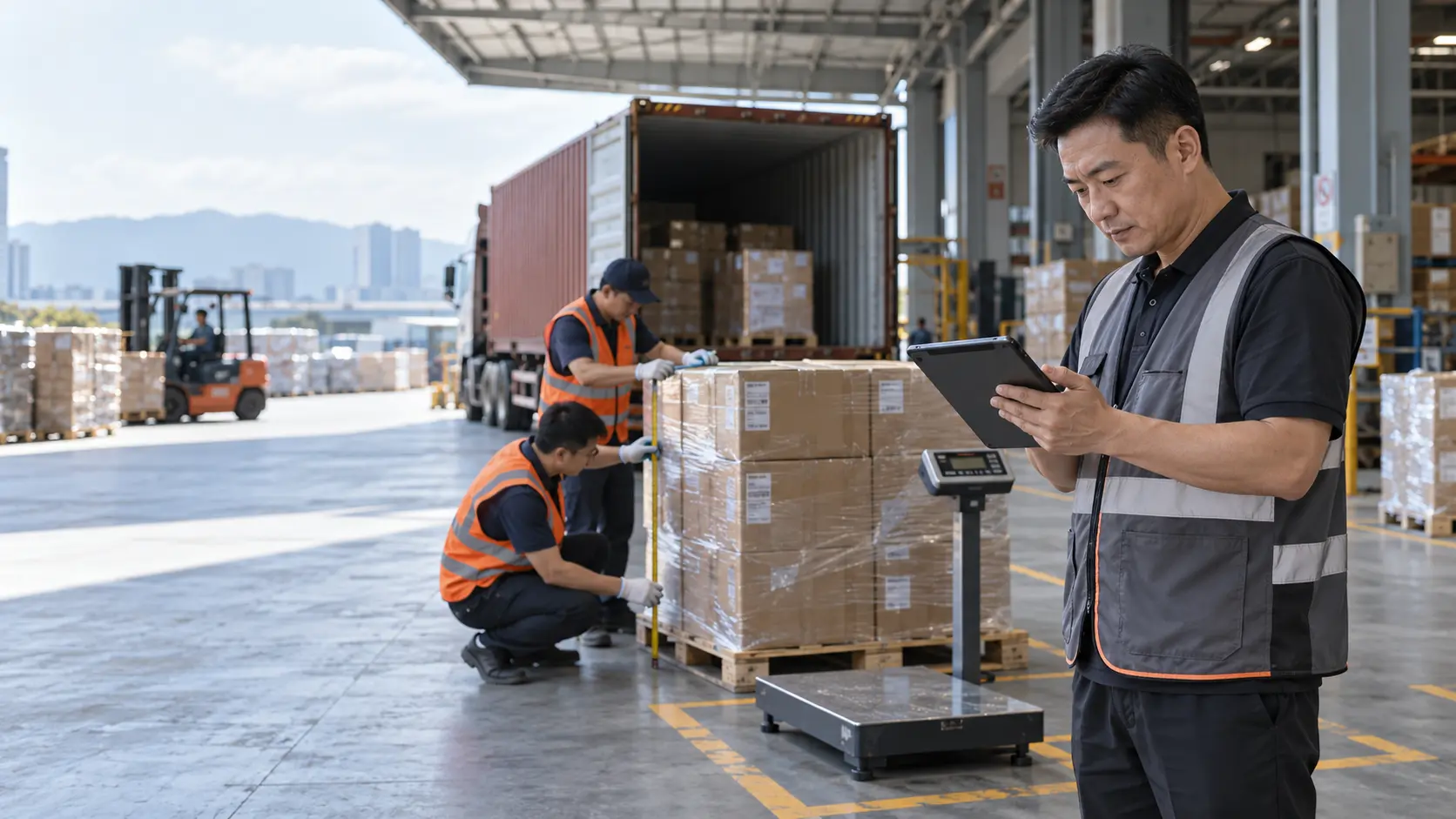
“Door-to-door shipping from China” sounds simple: collect the goods from a Chinese supplier and deliver them to the buyer’s address. In practice, the space between those two doors contains many separate services, parties and possible charges. A quotation may include factory pickup, export handling, international freight and final delivery, yet exclude import duty, tax, customs inspection, unloading or storage. Another provider may use the same phrase for a different scope. That is why a small importer should compare the written inclusions and exclusions—not the label alone. This guide explains the typical stages, the costs that may sit outside the price and the questions to ask before booking door-to-door shipping from China.
Quick answer: what does door-to-door shipping from China include?
A well-defined door-to-door service can connect:
- Pickup from the supplier or China warehouse
- Origin receiving, measurement or consolidation
- Export documentation and customs handling
- Sea, air or express transport
- Destination handling and cargo release coordination
- Import customs clearance, if specifically included
- Delivery to a named commercial or residential address
However, door-to-door does not automatically mean all-inclusive, duty-paid or unloaded. The quotation must identify whether duty and tax, customs brokerage, destination terminal charges, inspections, delivery equipment and unloading are included.
The most useful definition is therefore not “from one door to another.” It is:
A written chain of transport and handling services from a precise pickup point to a precise delivery point, with every responsibility, assumption and exclusion identified.
Door-to-door is a service description, not an Incoterm
Door-to-door describes the transport scope arranged by a logistics provider. An Incoterm defines selected delivery, cost and risk responsibilities between the seller and buyer under their sales contract. They are related, but they are not interchangeable.
A door-to-door freight quotation may support an EXW purchase, an FCA handover, a DAP sale or a workable DDP arrangement. The freight forwarder still needs the commercial Incoterm because it affects who controls pickup, export clearance, import clearance and payment of particular charges.
If you have not yet chosen the purchase term, compare EXW vs FOB from China before requesting the complete logistics scope.
DAP, DDP and DPU: three terms importers should not confuse
The International Chamber of Commerce’s Incoterms 2020 guidance on DAP and DDP explains that both terms can involve carriage to a named destination, but the import-clearance responsibility is different.
| Term | Import clearance and duty/tax | Final delivery | Unloading at named place |
|---|---|---|---|
| DAP — Delivered at Place | Buyer | Seller arranges carriage to the named place | Normally buyer responsibility |
| DDP — Delivered Duty Paid | Seller, subject to local legal and operational feasibility | Seller arranges carriage to the named place | Normally buyer responsibility |
| DPU — Delivered at Place Unloaded | Buyer | Seller arranges carriage to the named place | Seller unloads |
Under DAP, the cargo is delivered ready for unloading at the named place, while the buyer handles import formalities. Under DDP, the seller assumes import-clearance responsibilities as well. DDP is not always legally or operationally possible because some countries require a local importer, tax registration, licence or other local capacity.
Unloading is also easy to misunderstand. DAP and DDP normally leave unloading to the buyer; DPU is the rule that expressly requires delivery after unloading. A freight contract can price unloading separately, but the written service scope should make that clear.
The seven stages of a complete door-to-door shipment
1. Supplier coordination and factory pickup
The origin team contacts the supplier, confirms the collection address, cargo-ready date, package count and loading conditions, then selects a suitable vehicle. This stage may be straightforward for cartons but requires more planning for long, fragile, heavy, battery-powered or oversized goods.
Before dispatching a truck, confirm:
- Complete supplier address and contact person
- Collection hours and appointment rules
- Packed dimensions, gross weight and package count
- Whether the factory can load the vehicle
- Forklift, crane or manual-labour requirements
- Dangerous or restricted cargo characteristics
- Shipment marks and purchase-order references
A failed pickup, excessive truck waiting or unexpected lifting requirement can create an additional charge. These costs are avoidable when the final packing and loading method are confirmed early.
2. Origin warehouse receiving and consolidation
For LCL, air freight, express or multi-supplier orders, goods may first enter a China warehouse. The warehouse can record package condition, dimensions and weight, apply shipment marks, consolidate orders and prepare the cargo for international transport.
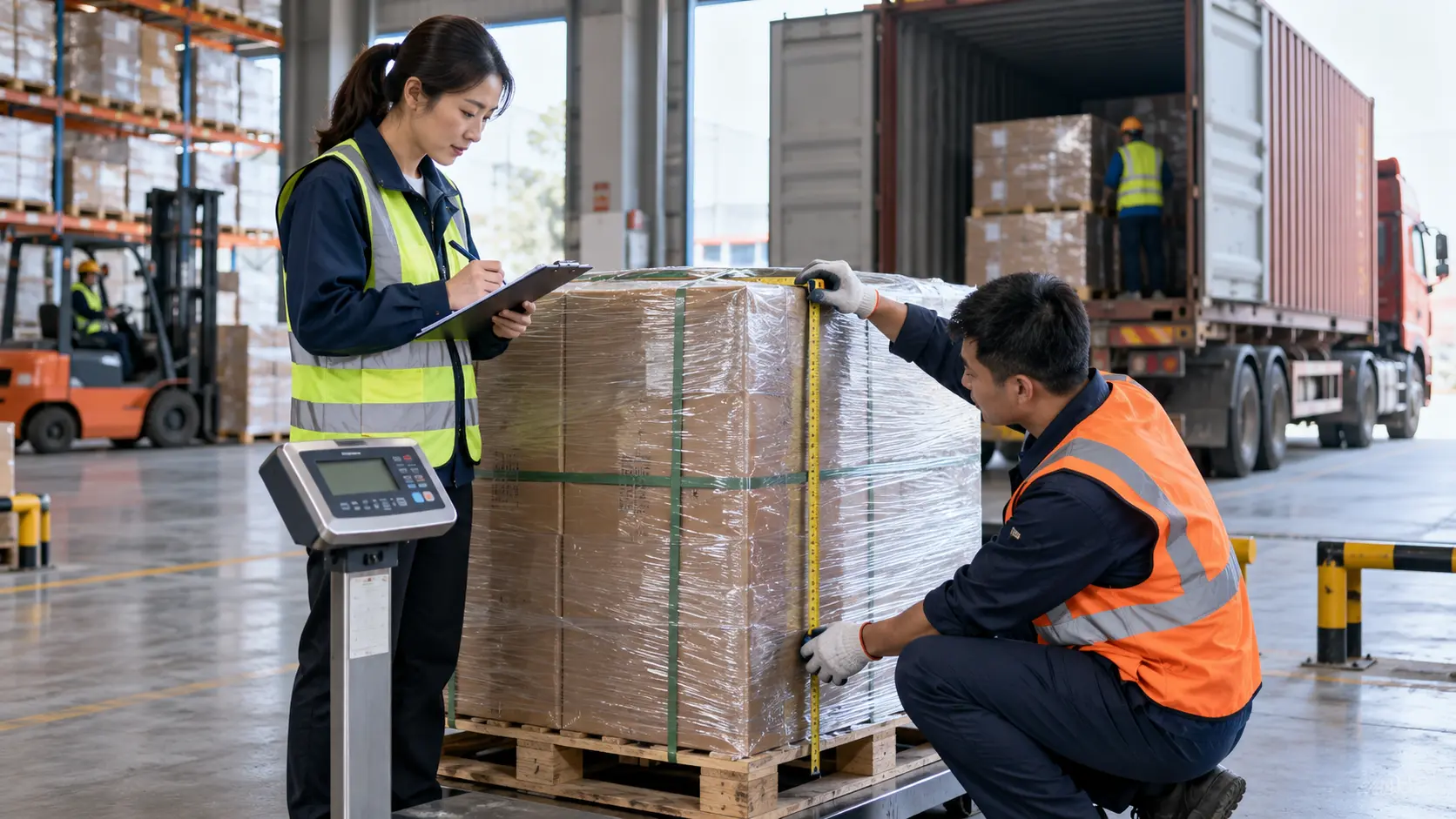
The actual warehouse measurements may differ from a supplier’s estimate. LCL and air freight are charged using volume or chargeable weight, so the final amount can change after receiving. Our guide to freight quote changes after pickup explains how remeasurement, repacking and special-cargo declarations affect a quotation.
Ask whether the warehouse price includes receiving, short-term storage, pallet handling, photos, labelling and consolidation. Do not assume every operation is part of one handling fee.
3. China export handling and documentation
The export stage can include booking, customs declaration coordination, transport documents, origin terminal handling and delivery to the airline, vessel or consolidator.
The exporter and logistics team may require:
- Commercial invoice and packing list
- Accurate product description and HS classification information
- Seller and buyer details
- Export licences or certificates where applicable
- Battery, chemical, magnetic, liquid or other special-cargo documents
- Shipping instructions and consignee information
The freight forwarder coordinates the transport documentation, but the seller and buyer remain responsible for providing truthful product, value and party information. Incorrect descriptions can cause inspection, amendment, delay or penalties.
4. Main international transport
The main transport may be FCL, LCL, air freight or express. A door-to-door quotation should identify the selected service, route, carrier basis, estimated schedule and rate validity.
| Mode | Best suited to | Door-to-door detail to confirm |
|---|---|---|
| FCL sea freight | Larger or container-suitable cargo | Container size, loading, destination release, truck delivery and empty return |
| LCL sea freight | Smaller non-urgent commercial cargo | CBM/weight basis, destination deconsolidation and warehouse collection/delivery fees |
| Air freight | Urgent or higher-value cargo | Chargeable weight, airport handling, security and final-mile scope |
| Express courier | Samples and small parcels | Remote-area, oversized, import-tax and brokerage treatment |
Estimated transit time is not the same as guaranteed door-to-door lead time. Supplier readiness, warehouse cut-offs, customs, transshipment, destination release and delivery appointments all affect the complete schedule.
5. Destination handling and cargo release
After arrival, the carrier, airline, terminal, deconsolidation warehouse and destination agent may each have a role. Depending on the mode, the shipment may require an arrival notice, original or electronic release, destination payment and a delivery order before cargo can move.
Common destination items include:
- Carrier or airline destination charges
- Terminal or deconsolidation handling
- Document and release fees
- Port or airport storage
- Container demurrage or detention
- Customs-broker or destination-agent fees
Some of these amounts are included in a genuine destination-inclusive quotation. Others are payable locally or can only be estimated before arrival. Request the charging basis and payer in writing. The destination shipping charges guide shows the checks to make before cargo reaches the port.
6. Import customs clearance
Customs clearance is not automatically included merely because the quotation says door-to-door. Ask which of these three scopes applies:
- Delivery only after buyer-arranged clearance: the importer appoints and pays its own broker.
- Brokerage coordination included: the logistics provider appoints or coordinates a broker, but duty, tax, inspection and disbursement may remain separate.
- DDP-style scope: import clearance and specified duties/taxes are included only where the arrangement is compliant and commercially confirmed.
The exact process depends on the destination, importer status and commodity. Food, timber, plant material, medical goods, chemicals, batteries, vehicles and regulated equipment can require additional permits or agency review.
No responsible provider should guarantee clearance before reviewing the product description, materials, value, origin, consignee and local import requirements.
7. Final delivery—and possibly container return
The final mile should name the complete address or at least a valid postcode for the quotation. Commercial warehouses, residential addresses, farms, construction sites and city-centre locations have different access and equipment requirements.
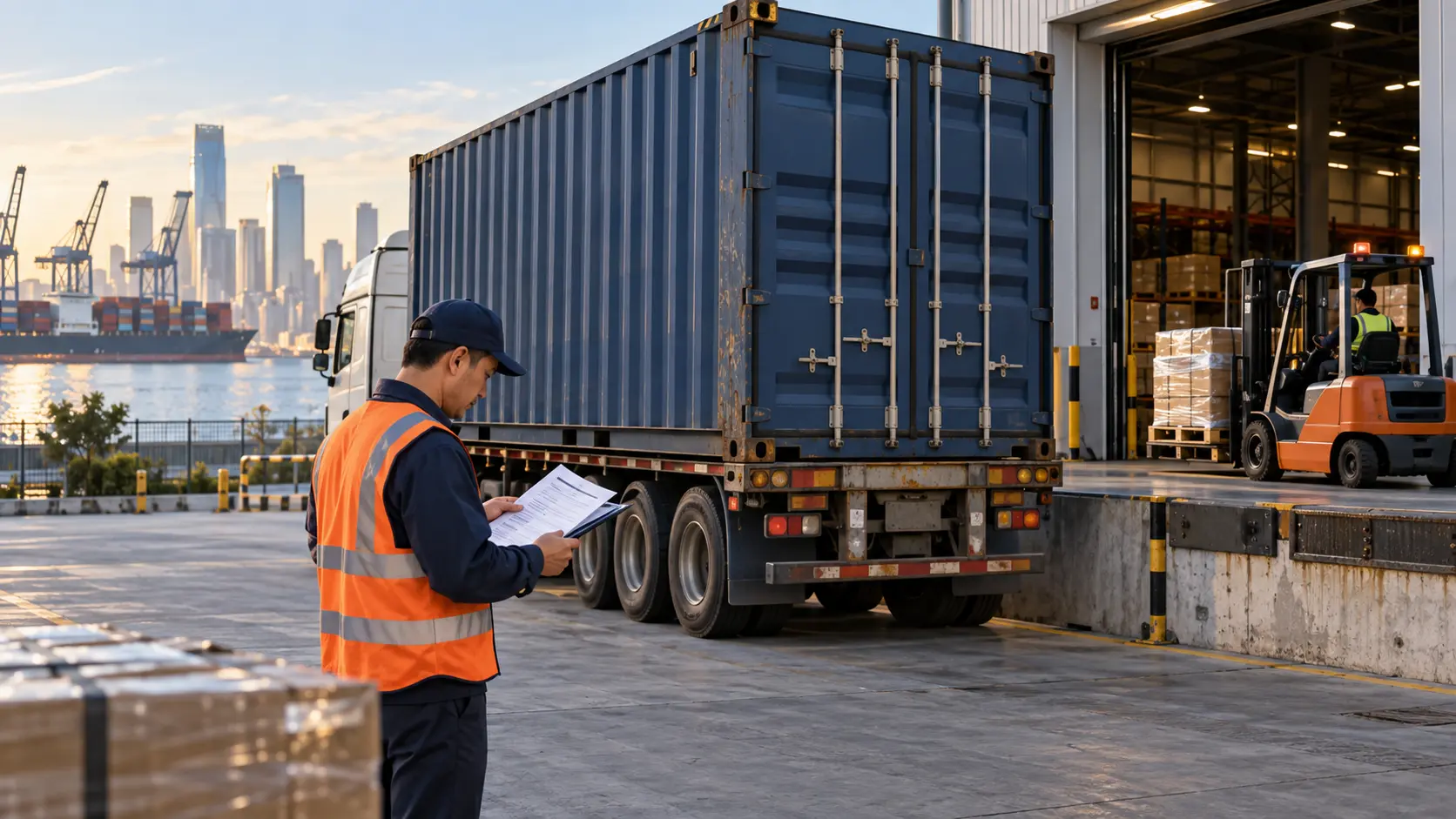
For FCL, delivery does not end when the container reaches the importer. The empty container normally must be returned to the carrier’s nominated depot within the applicable free time. Confirm who arranges the return, the allowed unloading time and the cost of detention, waiting or a failed trip.
For LCL or air freight, final delivery may be kerbside, tail-lift, dock delivery or inside delivery. Each has a different cost. State what the receiving site can safely do.
What is commonly included in a door-to-door quote?
A complete quotation may include the following, but the buyer should verify every line:
| Stage | Possible inclusion | Scope detail to request |
|---|---|---|
| China pickup | Truck from supplier to warehouse/port | Address, vehicle, waiting and loading assumptions |
| Origin handling | Receiving, measurement, consolidation | Package count, storage days, pallet or label work |
| Export | Customs coordination and documents | Exporter responsibility, permits and amendments |
| Main freight | Sea, air or express service | Route, chargeable basis, validity and surcharges |
| Destination | Terminal/agent handling | Included fees versus charges payable locally |
| Clearance | Customs-broker service | Duty, tax, inspection and disbursement treatment |
| Delivery | Transport to named address | Vehicle, access, appointment, unloading and return |
The words “all-in” are not enough. Ask for the origin, main freight, destination, clearance and delivery components to be shown separately even when they form one total.
What is often excluded or charged only if it occurs?
The following items are frequently excluded, provisional or billed at cost:
- Import duty, VAT, GST or other taxes unless explicitly included
- Customs examination, X-ray, inspection or intensive examination
- Quarantine, biosecurity, fumigation or treatment
- Product testing, permit, certification or agency fees
- Storage, demurrage and detention caused by delay
- Port congestion or carrier surcharges introduced outside quote validity
- Document amendment, manifest correction or late filing
- Cargo insurance unless separately purchased
- Repacking, pallets, labelling or export marks not in the original scope
- Tail-lift, forklift, crane, side-loader or manual unloading
- Remote-area, residential, limited-access or after-hours delivery
- Truck waiting, failed delivery, redelivery or address change
- FCL drop-and-return, container washing, repair or late empty return
- Charges caused by inaccurate dimensions, weight or cargo description
An exclusion is not necessarily a hidden charge. Some events cannot be known before customs or the carrier acts. The important test is whether the possible event, payer and calculation method were disclosed before booking.
FCL, LCL, air and express are not priced the same way
For FCL, the container transport chain matters: empty release, factory loading, port gate-in, ocean freight, destination release, delivery appointment, unloading time and empty return.
For LCL, the shipment shares container space. Origin and destination warehouses charge according to volume, weight and handling. A low ocean-freight figure can be outweighed by destination deconsolidation charges.
For air freight, chargeable weight, security rules, airport handling and customs timing are central. Door delivery may be priced only after the postcode and package dimensions are confirmed.
For express, the courier network combines linehaul and final delivery, but duty, tax, brokerage, remote-area and oversized-package surcharges may still apply.
Ask the forwarder to compare the total deliverable scope, not just the main transport rate.
A practical example: why two door-to-door quotes differ
Imagine a small importer buying three pallets from two suppliers in Foshan and Shenzhen. Both providers quote delivery to a warehouse overseas.
| Component | Quote A | Quote B |
|---|---|---|
| Two supplier pickups | Included | One pickup only |
| China consolidation | Included | Excluded |
| Export customs coordination | Included | Included |
| Ocean freight | Included | Included |
| Destination handling | Estimated and itemised | “Local charges apply” |
| Customs brokerage | Included, duty/tax excluded | Excluded |
| Delivery | Commercial dock delivery | Kerbside delivery |
| Unloading | Buyer provides forklift | Not stated |
Quote B may display the lower headline total, but it cannot be compared until the missing pickup, consolidation, destination, brokerage and delivery conditions are priced. Quote A is not automatically better; it is simply easier to evaluate because its scope is visible.
Ten questions to ask before accepting the quote
- What exact pickup address and delivery address are priced?
- Is supplier loading included, and what equipment is assumed?
- Are origin receiving, measurement, storage and consolidation included?
- Which export documents and customs tasks are included?
- What mode, route, service level and validity apply?
- Are carrier and destination handling charges included or payable locally?
- Who is the importer of record and who appoints the customs broker?
- Are duty, tax, inspection and biosecurity charges included, estimated or excluded?
- Is unloading included, and what access or equipment does the delivery site need?
- For FCL, who returns the empty container and what free-time assumptions apply?
Also request a clear list of shipment information. Use the China freight quote checklist so each provider prices the same cargo and destination.
Red flags in a door-to-door shipping offer
Be cautious when:
- A final price is given without cargo dimensions, weight or product details.
- The quote does not name the pickup and delivery points.
- Duty-paid delivery is promised without checking the importer and commodity.
- “All inclusive” appears without an exclusions list.
- The provider cannot explain who handles destination clearance and delivery.
- Unloading and delivery access are never discussed.
- There is no rate validity, sailing basis or chargeable-weight rule.
- You are asked to misdescribe cargo or declare an unrealistic value.
A good answer may sometimes be conditional: “We need the destination broker to confirm this item before shipment.” That protects the importer better than an unsupported guarantee.
How TengYoda builds a clearer door-to-door plan
TengYoda Logistics helps overseas small and medium-sized importers coordinate the China side of the shipment and connect it to the required international and destination services.
Depending on the agreed scope, we can coordinate supplier communication, factory pickup, warehouse receiving, cargo consolidation, export handoffs, sea freight from China, air or express transport and delivery through destination partners. Our China receiving network can support supplier handovers in Qingdao, Yiwu and Shenzhen, subject to confirming the shipment and warehouse arrangement in advance.
The practical benefit is not a promise that every charge disappears. It is a clearer view of:
- What TengYoda coordinates directly in China
- What the carrier or destination partner performs
- What the importer must provide or arrange
- Which amounts are confirmed, estimated or event-dependent
- Where an alternative mode or consolidation plan may reduce cost or risk
For multi-supplier orders, our transport and warehousing service can connect collection and consolidation before the main freight booking. For a complete shipment review, send the cargo information through the TengYoda enquiry form.
Information to send for a door-to-door quotation
Provide:
- Detailed product name, material and intended use
- Battery, liquid, powder, chemical, oil, magnet or other special contents
- Package count, external dimensions and gross weight
- Supplier name, city and complete pickup address
- Cargo-ready date
- Purchase Incoterm
- Destination country, city, postcode and complete delivery type
- Commercial, residential, farm, site or warehouse access conditions
- Available forklift, loading dock, crane or unloading labour
- Desired sea, air or express service
- Importer status and appointed broker, if any
- Required delivery date and insurance request
Photos of the cargo and packaging are useful, especially for machinery, fragile goods, unusual shapes or loose items.
Frequently asked questions
Does door-to-door shipping from China include customs clearance?
It may include customs-broker coordination, but it is not automatic. The quotation should state who acts as importer of record, who appoints the broker and whether duty, tax, inspection and disbursement are included or payable separately.
Does door-to-door shipping include import duty and tax?
Only if the written scope explicitly and compliantly includes them, such as a feasible DDP arrangement. Many door-to-door or DAP-style quotations leave import duty and tax to the buyer.
Does door delivery include unloading?
Usually not by default. DAP and DDP deliveries are normally completed with the goods ready for unloading, while the buyer unloads. Price a tail-lift, forklift, crane, side-loader or labour separately when required.
Is FCL or LCL better for door-to-door shipping?
It depends on cargo volume, weight, packaging, timing, destination charges and receiving conditions. Compare the complete FCL and LCL delivered cost rather than using CBM alone.
Can TengYoda arrange door-to-door shipping worldwide?
TengYoda can review China-origin door-to-door requirements across its service network, subject to cargo acceptance, route availability and destination-partner confirmation. Send the product, packed cargo, supplier location and destination postcode for a shipment-specific assessment.
Final checklist
Before booking, make sure the quotation states:
- Exact origin and destination
- Cargo and chargeable basis
- Incoterm and service scope
- Every included stage
- Every known exclusion
- Customs, duty and tax responsibility
- Delivery and unloading conditions
- Container-return requirements where relevant
- Rate validity and schedule basis
- Contact person for origin and destination coordination
Door-to-door shipping from China becomes easier to control when the two “doors” and every handoff between them are written clearly.
References and practical note
This article provides general logistics information. Customs, tax, importer-of-record and product requirements vary by destination and shipment. Confirm the current requirements with the relevant carrier, customs broker and authorities before shipping.