EXW and FOB can produce very different responsibilities and costs when you import from China. EXW may give the buyer more control from the factory, but it also places more China-side work and risk on the buyer. FOB usually requires the supplier to complete export formalities and deliver the goods on board at the named port, but the supplier's origin charges and operating arrangements still need to be checked. For a small importer, the better choice is not automatically the Incoterm with the lowest product price. It is the option that creates the clearest total cost, the most workable export process and the right level of control for the shipment. This guide compares EXW vs FOB from China in practical terms and shows how to request two quotations on the same basis before deciding.
Quick answer: is EXW or FOB better when importing from China?
FOB is often easier for a small importer working with one export-capable supplier, because the seller normally handles the China export formalities and delivers the goods on board the buyer's nominated vessel at the named port.
EXW can be useful when the buyer wants one freight forwarder to collect and consolidate orders from several Chinese suppliers, or when the buyer wants direct control over the China-side logistics. However, the buyer must arrange collection, loading responsibilities, export clearance and origin handling that may not be included in the supplier's price.
There is an important third option. For containerised cargo delivered to a terminal before it is loaded on the vessel, the International Chamber of Commerce notes that FCA may be more appropriate than FOB. The correct rule should match the real handover point, not merely the wording commonly used on a supplier quotation.
EXW vs FOB at a glance
| Question | EXW China | FOB named Chinese port |
|---|---|---|
| Where does the seller deliver? | Goods are placed at the buyer's disposal at the named premises or place | Goods are delivered on board the nominated vessel at the named port |
| Who normally arranges factory pickup? | Buyer | Seller, as part of delivery to the port/vessel |
| Who is responsible for loading at the factory? | Normally the buyer under the rule, unless the contract states otherwise | Seller manages the origin movement needed to complete FOB delivery |
| Who handles China export clearance? | Buyer is responsible under the rule | Seller |
| Who contracts the main international carriage? | Buyer | Buyer |
| Who handles import clearance? | Buyer | Buyer |
| Buyer control over China-side logistics | Higher, but with more operational responsibility | Lower before FOB delivery, depending on the agreed process |
| Typical small-importer challenge | Hidden pickup, loading, export and origin costs | Supplier-controlled origin costs or unclear FOB scope |
| Suitable transport modes | Any mode or multimodal transport | Sea or inland-waterway transport |
This table is a working summary, not a substitute for the complete ICC Incoterms 2020 rules or a shipment-specific contract.
What does EXW mean when buying from China?
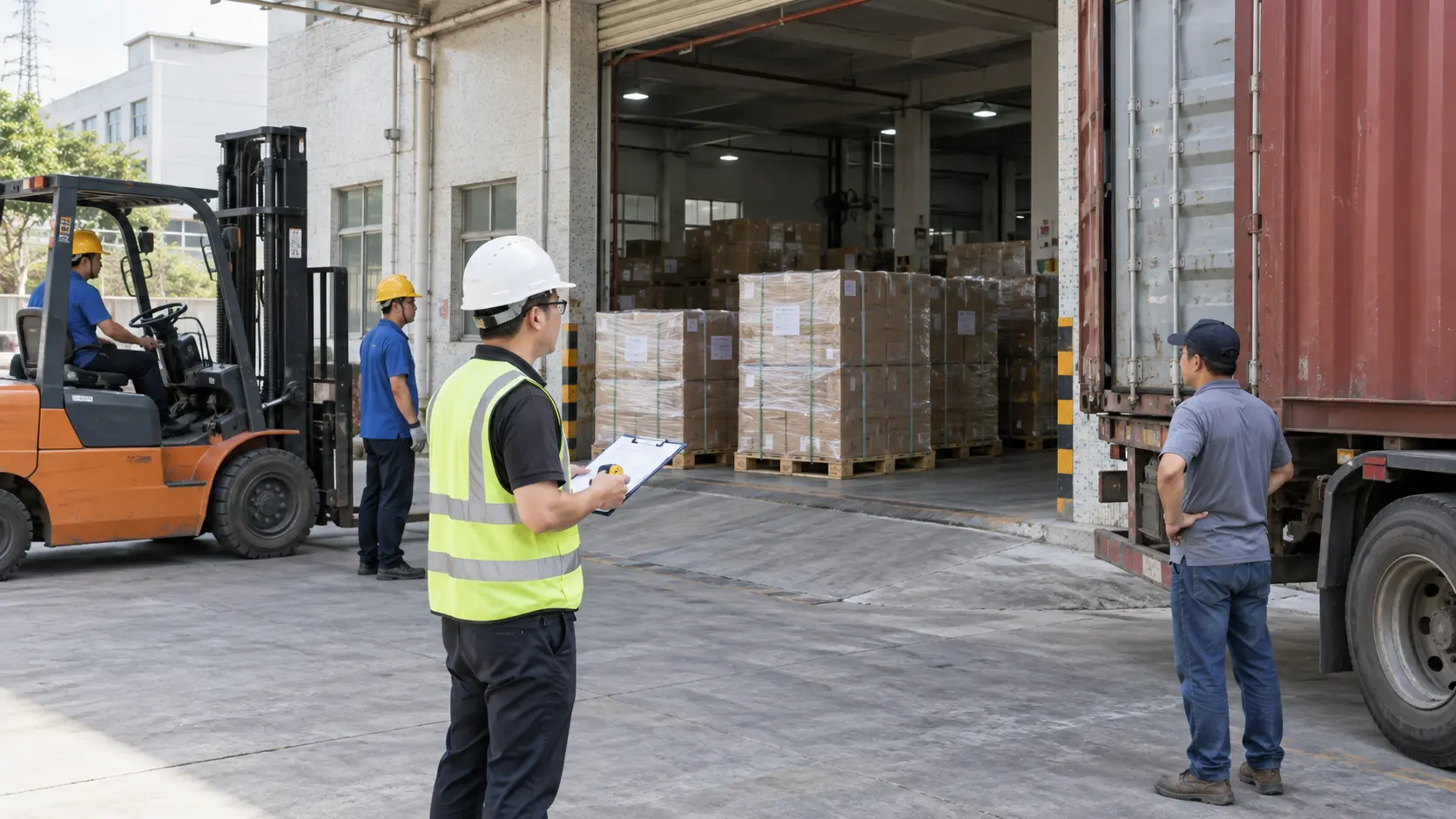
EXW means Ex Works. The seller delivers when the goods are placed at the buyer's disposal at the named place, commonly the factory or supplier warehouse. Under the formal rule, the goods are not cleared for export and are not loaded on the collecting vehicle by the seller.
This represents minimal obligations for the seller and broad responsibilities for the buyer. The ICC's comparison of EXW and FCA explains that the buyer assumes the costs and risks from the agreed delivery point and must organise the onward carriage.
In a real China shipment, the EXW buyer or its appointed logistics team may need to coordinate:
- Supplier contact and pickup appointment
- A suitable truck for the final packed cargo
- Loading arrangements at the factory
- Transport to a consolidation warehouse, airport or seaport
- China export declaration arrangements
- Origin warehouse, terminal and document charges
- Main international freight
- Destination clearance and delivery
The purchase contract may assign some practical tasks differently. For example, the supplier may agree to load the truck even though loading is not the seller's standard EXW obligation. Put any such agreement in writing because it affects cost, risk and insurance evidence.
What does FOB mean when buying from China?
FOB means Free on Board. Under FOB, the seller delivers the goods on board the vessel nominated by the buyer at the named port of shipment. The seller handles export formalities, while the buyer contracts and pays for the main carriage and manages the import-side responsibilities.
For example:
FOB Nansha Port, China, Incoterms 2020
is more precise than:
FOB China
The named port matters because trucking distance, port procedures, available sailings and origin costs vary between Shenzhen, Nansha, Xiamen, Ningbo, Shanghai, Qingdao and other ports.
The buyer still needs to coordinate with the supplier. The supplier requires the nominated carrier, booking information, terminal details, cut-off dates and documentation instructions in time to complete delivery.
Important: FOB is not normally the best technical fit for containerised cargo
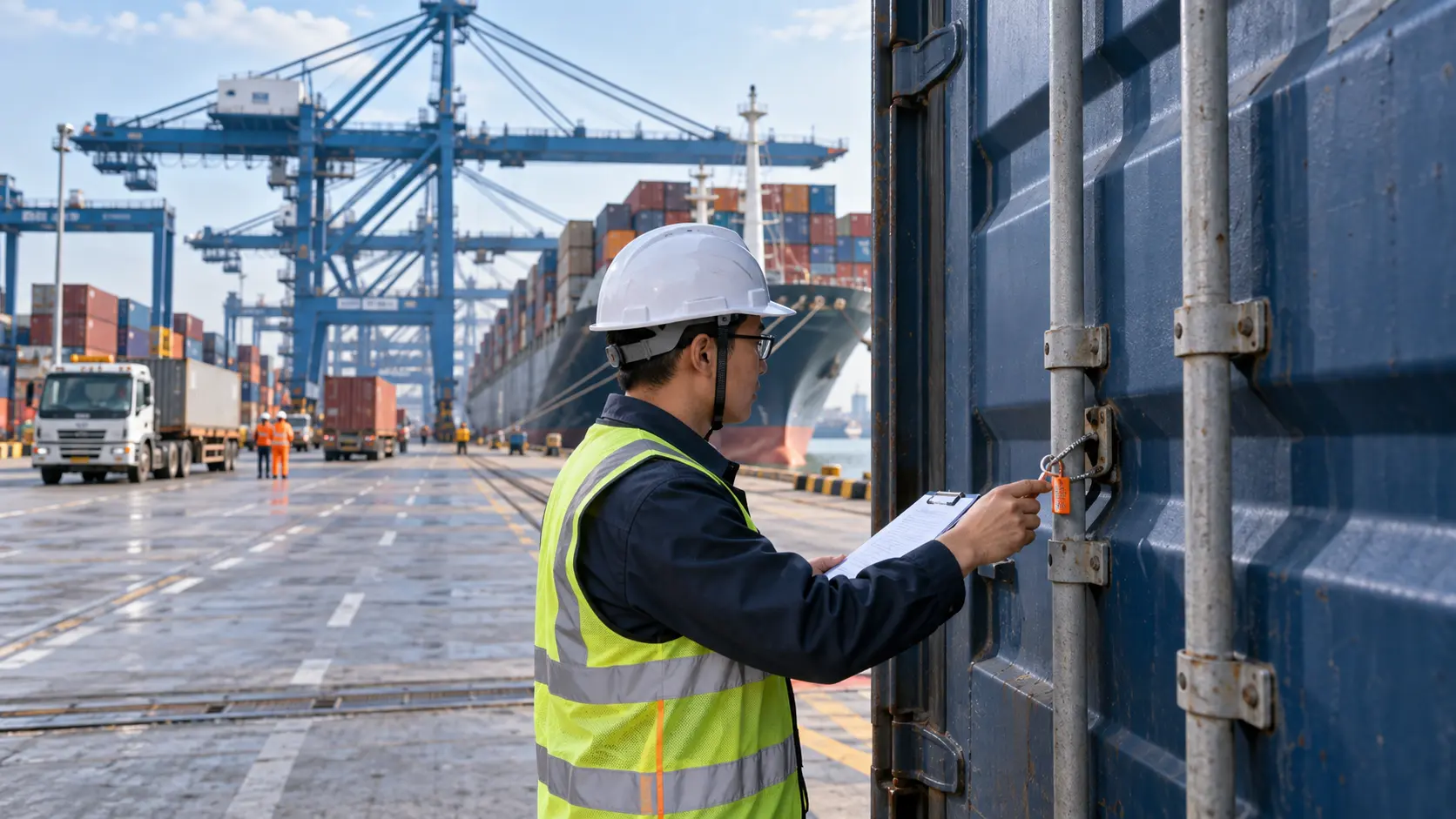
FOB remains widely used in commercial quotations, but the physical handover for container cargo often occurs before the container is loaded on board the ship. The supplier may deliver the sealed container to a terminal, after which the terminal and carrier control the loading process.
The ICC explains in its FAS or FOB guidance that FCA is generally more appropriate where containerised goods are delivered to a container terminal rather than directly alongside or on board the vessel.
This distinction can affect:
- The point where delivery and risk transfer
- Who controls the cargo between terminal gate-in and vessel loading
- Evidence required for payment under a letter of credit
- Responsibility when a container misses the intended vessel
A small importer does not need to become an Incoterms lawyer, but should ask the supplier and freight forwarder whether the written term matches the actual handover.
The true EXW cost is more than the supplier's product price
EXW frequently looks cheaper because the supplier has fewer logistics obligations. That does not mean the importer's total cost is lower.
An EXW calculation may need to add:
- Factory loading or labour
- Pickup trucking
- Waiting or failed-collection risk
- Warehouse receiving and measurement
- Consolidation with other supplier orders
- Export packing, pallets or shipment marks
- Export declaration and related document coordination
- Origin terminal or airport handling
- Main freight
- Destination charges, import clearance, tax and delivery
If several suppliers are located in different cities, calculate each pickup separately. A low-value order in a distant province may cost more to collect than expected.
The final packed cargo also matters. If the supplier quoted product dimensions rather than export-package dimensions, the LCL, air-freight or express price may change after warehouse measurement. Read why a freight quote can change after pickup before comparing an early estimate with a final booking price.
The true FOB cost also needs checking
FOB is not automatically an all-inclusive China-to-destination price. It describes the seller's and buyer's delivery obligations; it does not mean the main freight, destination charges, import duty or final delivery are included in the product price.
Ask the supplier to identify what is included in its FOB price:
- Transport from the factory to the named port
- Export customs declaration
- Origin terminal handling
- Documentation
- Container loading or LCL warehouse delivery
- Any supplier or nominated-agent service fee
Then ask the buyer's freight forwarder to price:
- Main international transport
- Carrier surcharges
- Cargo insurance if requested
- Destination agent or terminal charges
- Customs brokerage
- Duty and tax treatment
- Delivery and unloading
- Container return responsibilities for FCL
One frequent problem occurs when two quotes use the word FOB but do not use the same boundary. A transparent comparison must show the named port, cargo details, validity period and every included or excluded charge.
Who controls the freight forwarder under EXW and FOB?
Under both EXW and FOB, the buyer can appoint the provider for the main international carriage. The practical amount of control at origin may still differ.
With EXW, the buyer can ask one China freight forwarder to contact the supplier, collect the goods, receive them at a warehouse, verify the packages and arrange export transport. This can create useful visibility, especially when several suppliers are involved.
With FOB, the supplier controls more of the movement before delivery. Some factories use their regular local forwarding agent or include origin work in the product price. The buyer should still confirm who communicates with the factory, who receives the booking and who is responsible when the cargo misses a cut-off.
Control is valuable only when the appointed team has accurate information and clear authority. The importer should avoid a situation where the supplier, sourcing agent, forwarder and destination broker each assume another party is handling the same task.
When EXW may be the better choice
EXW may be practical when:
- You are buying from several Chinese suppliers and want to consolidate the orders.
- Your China freight forwarder can coordinate pickup and export arrangements.
- You want independent warehouse measurements and cargo photographs.
- You want to compare air, LCL and FCL after all goods arrive.
- The supplier's FOB origin charges are unclear or unusually high.
- You need repacking, labelling, inspection or special loading before export.
For multi-supplier shipments, give every supplier a shipment mark and order reference before dispatch. TengYoda can coordinate supplier receiving and cargo consolidation through its China-side warehouse network, subject to confirming the receiving location and scope before delivery. See our China cargo consolidation service and warehouse consolidation process.
EXW is less suitable when the buyer has no party able to manage export-side tasks or when the supplier cannot cooperate with the information needed for export.
When FOB may be the better choice
FOB may be practical when:
- One supplier is shipping a standard commercial order.
- The supplier regularly exports the product and can complete China export formalities.
- The supplier has a clear and competitive origin-cost structure.
- The buyer wants to control the carrier and main freight without managing factory pickup.
- The named port and cargo-ready date are confirmed.
- Responsibilities for terminal delivery, cut-offs and documents are written clearly.
FOB can reduce the number of China-side tasks for a first-time importer. It should still be compared against the complete EXW alternative, particularly when the supplier adds high origin charges or uses an agent that does not communicate clearly with the buyer's forwarder.
EXW vs FOB cost example
Consider a hypothetical small importer buying palletised equipment from a Foshan supplier for shipment through Nansha.
| Cost component | EXW quotation | FOB quotation |
|---|---|---|
| Product price | Lower | Higher |
| Factory loading | Buyer scope unless otherwise agreed | Included in seller's delivery process |
| Foshan pickup | Buyer/forwarder | Seller |
| Export declaration | Buyer-arranged | Seller |
| Origin handling | Buyer/forwarder | Seller, subject to quoted scope |
| Main ocean freight | Buyer | Buyer |
| Destination costs | Buyer | Buyer |
It would be misleading to compare only the first row. Add every origin component to the EXW product price, then compare that total with the supplier's FOB price at the same named port.

The result can go either way. EXW may be more economical when the buyer consolidates several suppliers efficiently. FOB may be simpler and cheaper when one experienced exporter has a well-organised origin process.
Seven questions to ask before choosing
1. Does the supplier have the ability and experience to export this product?
Ask whether the supplier normally completes export declarations under its own or an authorised export arrangement. Do not assume that a domestic-only supplier can perform the same FOB process as an experienced exporter.
2. What is the exact named place or port?
Write the factory address for EXW and the specific Chinese port for FOB. City-level wording alone may not define the operational handover.
3. Who loads the collecting vehicle?
Confirm the people and equipment required, particularly for heavy, fragile or oversized cargo.
4. What are the final packed dimensions and weight?
The transport comparison is unreliable until packaging is known. Request external dimensions, gross weight, package count and photos.
5. Who completes China export formalities?
The Incoterm assigns responsibility, but the actual exporter, declaration documents and authorisation arrangement must still be workable.
6. Which origin charges are included?
Request an itemised list covering pickup, export handling, documentation, terminal or warehouse charges and special operations.
7. Does the selected rule match the actual handover?
For containerised cargo, ask whether FCA at the supplier premises, warehouse or terminal is a better description than FOB.
How to request an EXW and FOB comparison
Send the same shipment information for both options:
- Complete product description, material and intended use
- Battery, liquid, powder, chemical, oil, magnet or other special characteristics
- Number and type of packages
- External packed dimensions and gross weight
- Supplier name, contact and complete pickup address
- Confirmed cargo-ready date
- Proposed Chinese port
- Destination port or delivery postcode
- Required shipping method
- Delivery deadline
- Destination clearance and delivery scope
Then request two clearly separated calculations:
Option A: EXW supplier address, including loading assumptions, pickup, export arrangements, China origin charges and main freight.
Option B: FOB named Chinese port, including main freight from the seller's completed FOB delivery point.
Use our China freight quote checklist to prepare the enquiry, and compare providers with the reliable China freight forwarder checklist.
How TengYoda supports small importers under EXW or FOB
TengYoda Logistics helps overseas importers coordinate China-side freight handovers with a clear working scope. Depending on the agreed service, the team can contact suppliers, arrange factory pickup, receive cargo, consolidate multiple orders, check package information and connect the final cargo to sea, air or express transport.
For an EXW enquiry, TengYoda can identify the China-side tasks that need to be added to the supplier's product price. For an FOB enquiry, the team can coordinate booking details with the supplier and clarify where the supplier's responsibility ends and the buyer's freight scope begins.
The goal is not to declare one Incoterm universally superior. It is to help the importer compare:
- The same cargo
- The same origin and destination
- The same ready date
- The same transport method
- The same service boundary
Explore TengYoda's China export logistics service and factory pickup and warehousing service, or send your supplier and cargo details to Vinson for an EXW-versus-FOB scope review.
Frequently asked questions
Is EXW cheaper than FOB from China?
The EXW product price is usually lower because the seller performs fewer logistics tasks. The total import cost is not necessarily lower after adding loading, pickup, export arrangements and origin handling. Compare both options to the same named port and service scope.
Who pays freight under FOB?
The buyer contracts and pays for the main carriage under FOB. The seller is responsible for delivering the goods on board the nominated vessel at the named port and completing the export formalities. The sales contract and quotation should identify the applicable charges clearly.
Who handles export customs clearance under EXW?
The buyer is responsible under the EXW rule. In practice, the buyer must ensure there is a legally and operationally workable export-declaration arrangement in China. Confirm this before pickup rather than assuming the freight forwarder can solve missing exporter documents after collection.
Can I use EXW for orders from multiple Chinese suppliers?
Yes, provided a China-side team can coordinate each pickup, receiving record, shipment mark, document and export arrangement. Consolidation can reduce duplicated transport, but only after the final combined cargo is measured and reviewed.
Is FOB suitable for air freight?
FOB is intended for sea or inland-waterway transport. FCA is generally the more appropriate rule for air, road, rail or multimodal shipments. Use the full rule with a named delivery place.
Does FOB include destination customs clearance and delivery?
No. FOB does not make the seller responsible for import clearance, duty, tax or final delivery. Those items require a separate destination or door-delivery scope.
References
- International Chamber of Commerce: Incoterms 2020
- ICC Academy: Incoterms 2020—EXW or FCA?
- ICC Academy: Incoterms 2020—FAS or FOB?
*This article provides general logistics information and does not replace the complete Incoterms rules, a sales contract, customs advice or legal advice. Confirm the applicable rule, named place and shipment-specific requirements with the relevant parties.*