For many importers, one of the most stressful moments in international shipping is seeing that the container has already arrived at the destination port, but customs has not released the cargo. The vessel has arrived. The container has been discharged. The supplier may already have been paid. Ocean freight may already have been settled. But the cargo still cannot leave the port. So what exactly is happening? And once customs finally releases the shipment, what should the importer do next? This guide explains the process step by step, especially for importers shipping goods from China.
Vessel Arrival Does Not Mean the Cargo Can Be Collected
This is one of the most common misunderstandings among first-time importers.
When a vessel arrives at the destination port, the container normally goes through several separate processes before it can actually be picked up.
A typical sequence may look like this:
Vessel arrives → Container discharged → Customs clearance → Customs release → Carrier release → EDO / delivery order → Truck pickup → Delivery → Empty container return
Each step is different.
A container can physically be sitting at the port while still being unavailable for collection. That is completely possible.
Why Is Customs Not Releasing the Cargo?
There are many possible reasons.
A customs hold does not automatically mean that something is seriously wrong. Sometimes it is simply part of the normal inspection process.
1. Customs Documents Are Incomplete
Customs may require documents such as:
- Commercial Invoice
- Packing List
- Bill of Lading
- Certificate of Origin
- Import permit
- Product certificates
- Customs declaration
- Other commodity-specific documents
If information is missing or inconsistent, clearance may be delayed.
For importers, it is important to make sure the shipping documents match the actual cargo description, quantity, value and consignee information.
2. The HS Code Needs Verification
The HS Code determines how the product is classified for customs purposes.
If customs believes that the declared HS Code does not accurately describe the goods, they may request additional information.
This can affect:
- Import duty
- GST or VAT
- Product restrictions
- Import permits
- Inspection requirements
Importers should not select an HS Code simply because it appears to have a lower duty rate. The classification should match the actual product.
3. Customs Wants to Verify the Declared Value
Customs may question whether the declared commercial value is reasonable.
They may request supporting documents such as:
- Supplier invoice
- Purchase contract
- Payment records
- Product quotation
- Order confirmation
Trying to artificially reduce the declared value can create much bigger problems than the tax saved.
4. Physical Inspection or Customs Scanning
Sometimes customs selects a container for:
- X-ray inspection
- Container scanning
- Physical inspection
- Cargo examination
This does not necessarily mean the importer has done anything wrong.
Some inspections are random, while others may be triggered by the product, importer history, declaration information or customs risk assessment.
5. Biosecurity or Quarantine Inspection
In countries with strict biosecurity requirements, customs clearance and biosecurity clearance may be separate procedures.
Goods containing or packed with materials such as:
- Solid wood
- Bamboo
- Plant products
- Food
- Agricultural products
- Used machinery
- Soil-contaminated equipment
may require additional inspection, treatment or supporting documentation.
For example, solid wood packaging may need to comply with applicable treatment and marking requirements before shipment.
What Should You Do When Customs Has Not Released the Cargo?
The worst thing an importer can do is simply wait without knowing what is happening.
The first step is to identify the exact reason for the hold.
Your customs broker or freight forwarder should confirm whether the cargo is waiting for:
- Document review
- Customs inspection
- Scanning
- Tax payment
- Biosecurity or quarantine clearance
- Import permit approval
- Another customs decision
“Customs has not released the cargo” is not enough information.
You need to know why the cargo has not been released and what action is required next.
Questions to Ask Your Customs Broker
If your shipment is delayed, ask for specific answers:
- Has the customs declaration been submitted?
- Has customs requested additional documents?
- Has the shipment been selected for inspection?
- Is the container waiting for scanning?
- Are duties or taxes outstanding?
- Has customs issued any written notice?
- Is biosecurity or quarantine clearance still pending?
- Is the container physically available at the terminal?
- Are storage charges already accumulating?
- What is the expected next operational step?
A professional customs broker should be able to explain which stage the shipment is currently at.
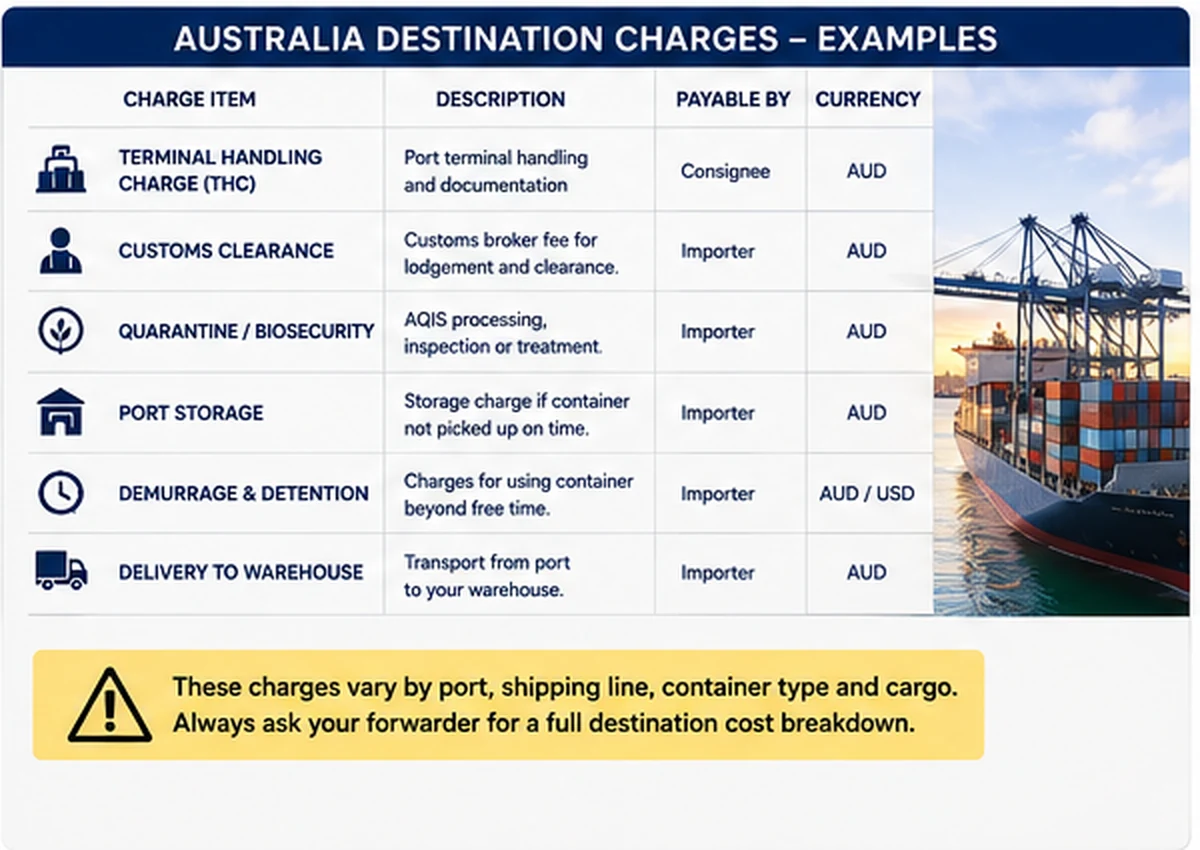
Pay Attention to Port Storage, Demurrage and Detention
This is where delays can become expensive.
Even if the customs issue itself is relatively small, the container may continue accumulating charges while waiting.
Depending on the port, carrier and terminal, these may include:
- Port storage
- Demurrage
- Detention
- Container hire
- Examination charges
- Lift-on / lift-off charges
- Customs inspection charges
- Truck waiting charges
Importers should therefore not focus only on “when customs will release the cargo.”
They should also monitor the free time.
Once the free time expires, costs can increase quickly.
What Happens Once Customs Releases the Cargo?
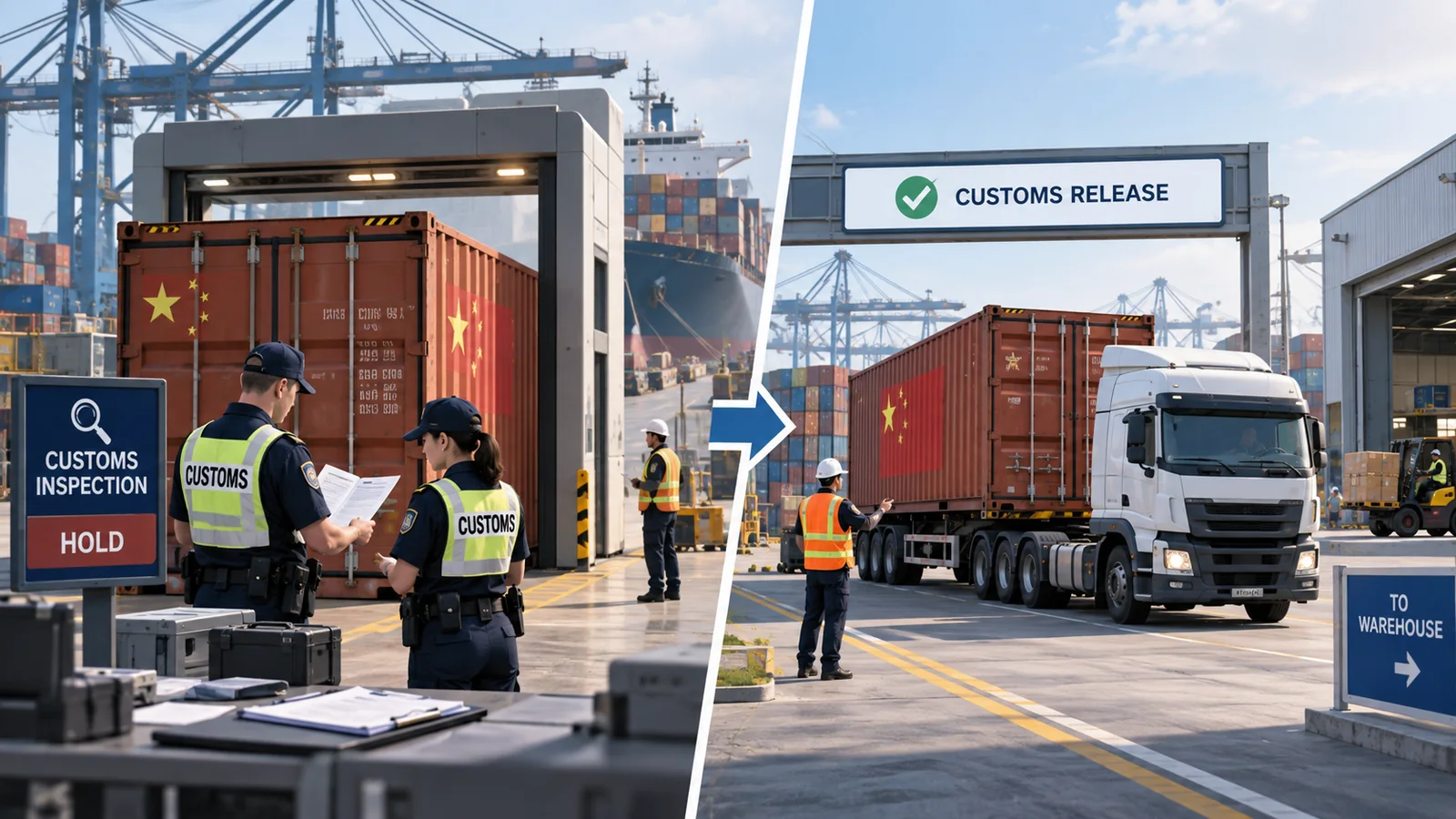
Customs release is very good news.
But it does not always mean the truck can immediately collect the container.
There may still be several steps remaining.
The next stage is normally to confirm whether the shipping line has also released the cargo.
Customs Release and Carrier Release Are Different
This distinction is extremely important.
There are usually two separate release processes.
Customs Release
This means customs has approved the import clearance.
Carrier Release
This means the shipping line has authorized the cargo or container to be delivered.
The shipping line may still require payment of:
- Destination charges
- Documentation charges
- Container deposit
- Local carrier charges
- Other outstanding fees
before issuing the delivery authorization.
So even when customs says “released,” the container may still not be available for pickup.
EDO or Delivery Order
Depending on the shipping line and destination country, the importer may need an EDO — Electronic Delivery Order or another form of delivery order.
This document confirms that the shipping line authorizes the container to be released.
Without the required release authorization, the truck may not be able to collect the container from the terminal.
For first-time importers, this is often confusing.
They may think:
“Customs released my cargo. Why can’t I pick it up?”
The answer is often that customs clearance is complete, but the carrier release process is not yet complete.
Arrange the Truck Quickly After Release
Once both customs and carrier release are completed, the next step should be arranged quickly.
The freight forwarder or local delivery company should normally:
Book the truck → Reserve terminal pickup → Collect the container → Deliver to the warehouse or consignee
If storage charges are already running, unnecessary delays should be avoided.
Where practical, it is better to prepare the delivery arrangement before final customs release so that the truck can be booked quickly once the cargo becomes available.
What If Customs Releases the Cargo Late?
Suppose the container arrived several days ago, but customs inspection delayed the release.
Once customs finally releases the cargo, part of the free container time may already have been used.
At this stage, the importer should immediately confirm:
- Remaining free days
- Last free day
- Container detention conditions
- Empty return deadline
- Empty return depot
- Whether an empty-return appointment is required
Do not assume the free time starts again after customs release.
In many cases, it does not.
After Delivery, Do Not Forget to Return the Empty Container
For FCL shipments, the job is not finished when the container arrives at your warehouse.
After unloading, the empty container normally needs to be returned to the shipping line’s nominated depot.
You should confirm:
- Where to return the empty container
- Deadline for empty return
- Whether an appointment is required
- Whether the depot is accepting the container
- Whether any container damage occurred
If the empty container is returned late, detention or container hire charges may continue accumulating.
A Practical Example
Imagine a container imported from China.
The vessel arrives on Monday.
The container is discharged on Tuesday.
Customs selects the container for scanning.
Scanning takes several days.
Customs finally releases the shipment on Friday.
What should happen next?
The correct process is not simply:
“Customs released it, so everything is finished.”
Instead:
- Confirm customs release.
- Confirm shipping line destination charges have been paid.
- Obtain carrier release / EDO.
- Confirm terminal availability.
- Book the truck.
- Pick up the container.
- Deliver to the consignee.
- Unload the cargo quickly.
- Return the empty container before the free-time deadline.
Every delay between these steps can potentially create additional charges.
How Importers Can Reduce Customs Delays
The best solution to customs problems is often preparation before the vessel arrives.
Before shipping from China, importers should confirm:
- Correct product description
- Correct HS Code
- Commercial Invoice
- Packing List
- Country of origin
- Import permits
- Product certificates
- Packaging materials
- Wooden packaging requirements
- Customs broker appointment
- Importer details
- Destination charges
- Estimated duty and tax
For certain products, this checking should happen before the goods even leave the factory.
Finding out that a product requires a special permit only after it reaches the destination port can be extremely expensive.
For more preparation tips, see our guide on documents required when shipping from China.
When Should the Customs Broker Start Working?
Do not wait until the vessel arrives.
For many shipments, the customs broker should receive the documents before arrival so that they can:
- Review the documents
- Identify missing information
- Confirm the HS Code
- Estimate duties and taxes
- Prepare the customs declaration
- Identify possible import restrictions
The exact timing depends on the destination country and shipment, but earlier preparation generally gives more time to solve problems before storage charges begin accumulating.
Communication Is Just as Important as Customs Clearance
When cargo is held by customs, importers often become anxious because they do not know what is happening.
A freight forwarder should not simply tell the customer:
“Still waiting for customs.”
A more useful update would explain:
“The declaration has been submitted. The container has been selected for customs scanning and is currently waiting for the inspection appointment. No additional documents have been requested at this stage. We are following up with the customs broker and will update you once the inspection is completed.”
That tells the importer:
where the cargo is, why it is delayed, and what happens next.
Good logistics is not only about moving cargo. It is also about giving customers accurate information at every important stage.
How This Fits Into the Wider Import Process
Customs release is only one part of the complete import chain.
If you are importing from China to Australia, you may also find these guides useful:
- What Happens After China Customs Release?
- DDP Shipping from China to Australia
- Shipping Cost from China to Australia
- FCL vs LCL Shipping from China to Australia
These articles explain how export clearance, ocean freight, import clearance, carrier release and delivery fit together.
Final Thoughts
A customs hold can be frustrating, but it does not necessarily mean something is wrong with the shipment.
The key is to identify the exact reason for the delay and respond quickly.
And once customs releases the cargo, the importer should immediately move on to:
carrier release → destination charges → EDO → truck pickup → delivery → unloading → empty container return
The faster these steps are coordinated, the lower the risk of unnecessary port storage, demurrage and container detention charges.
If you are importing goods from China and are unsure about customs preparation, shipping documents, destination charges or container release procedures, TengYoda Logistics can assist with shipping planning, document coordination, FCL/LCL ocean freight and destination logistics support.
For a broader overview of the import process, you can also read our first-time importing from China guide.